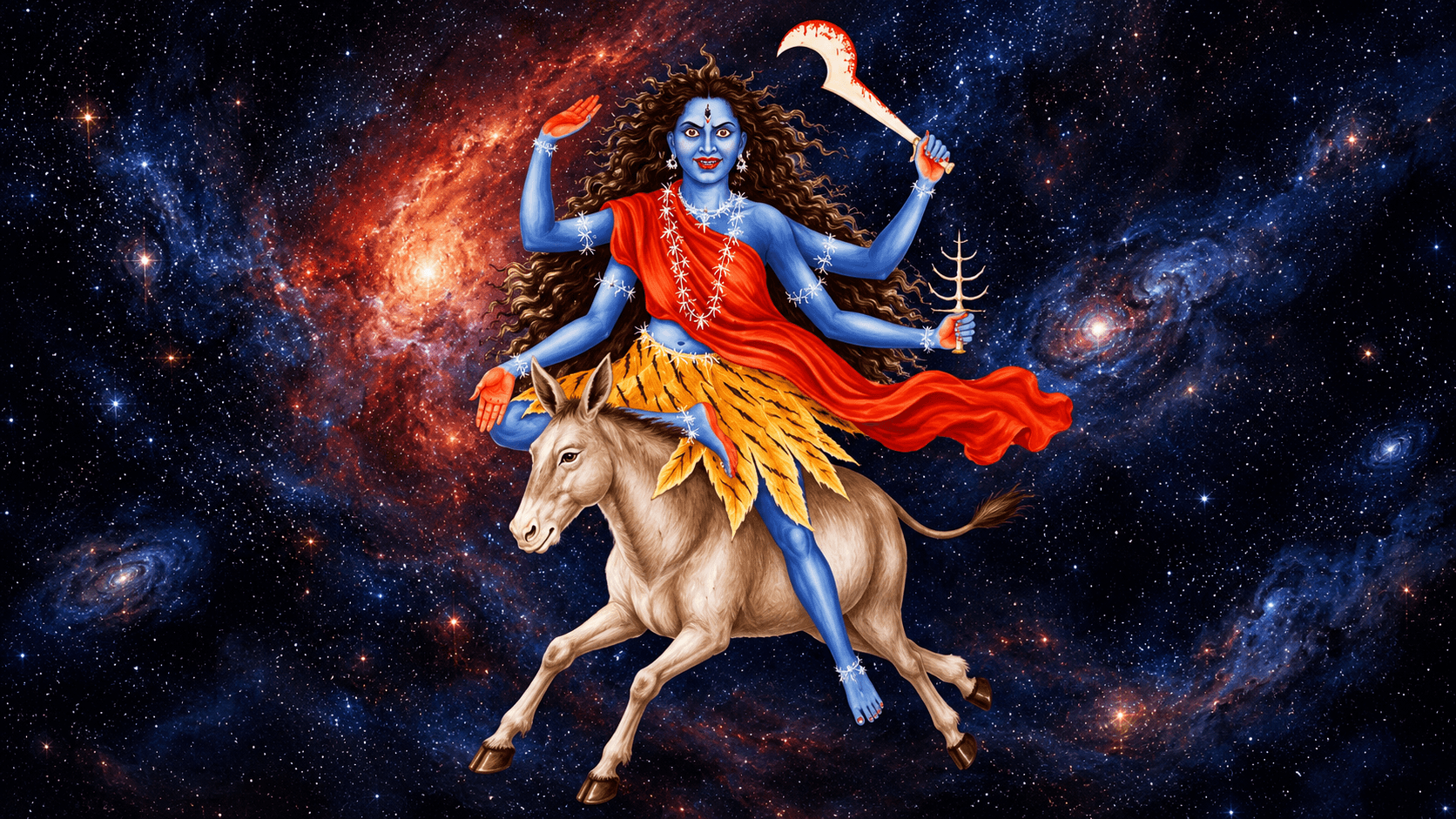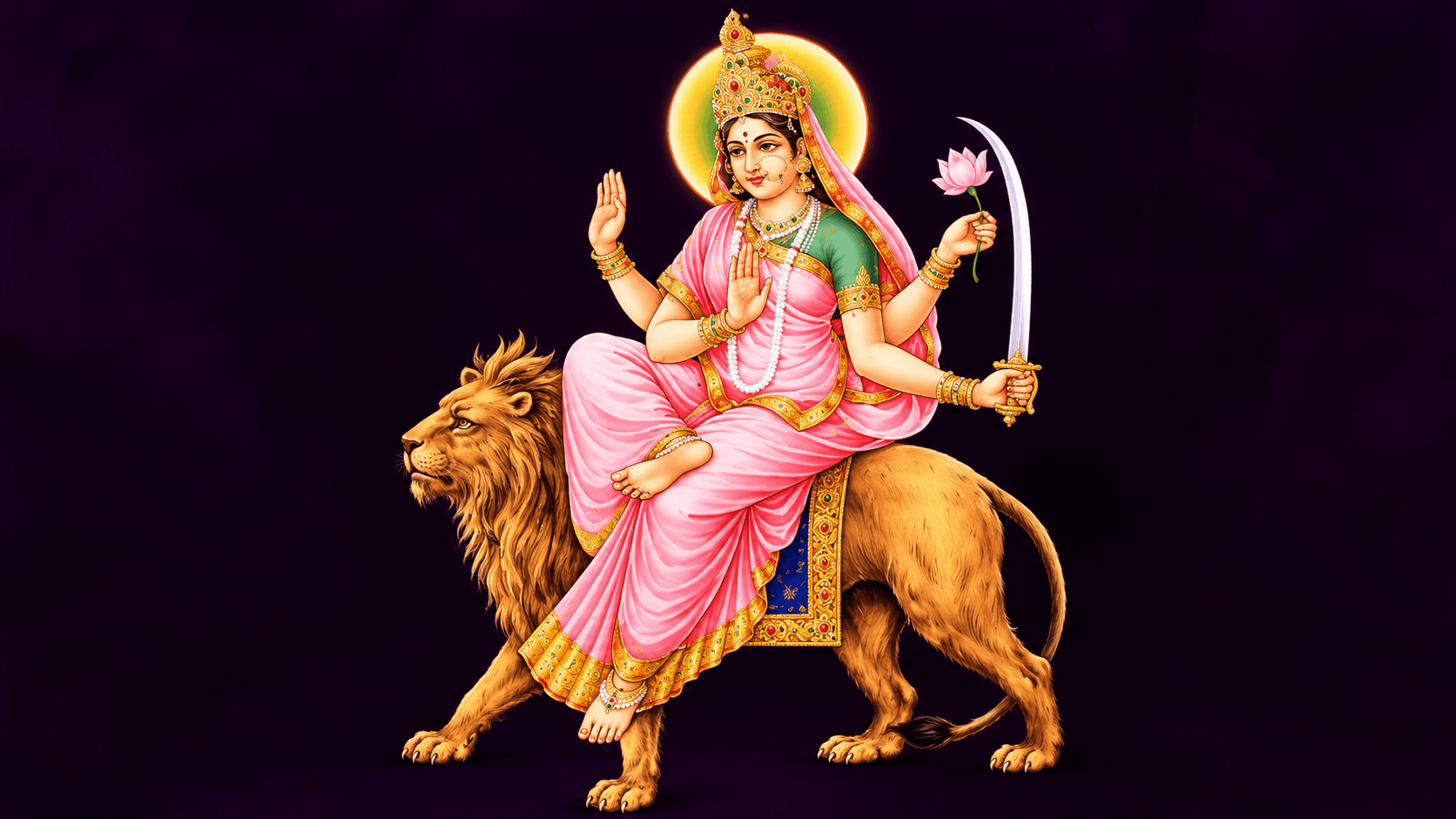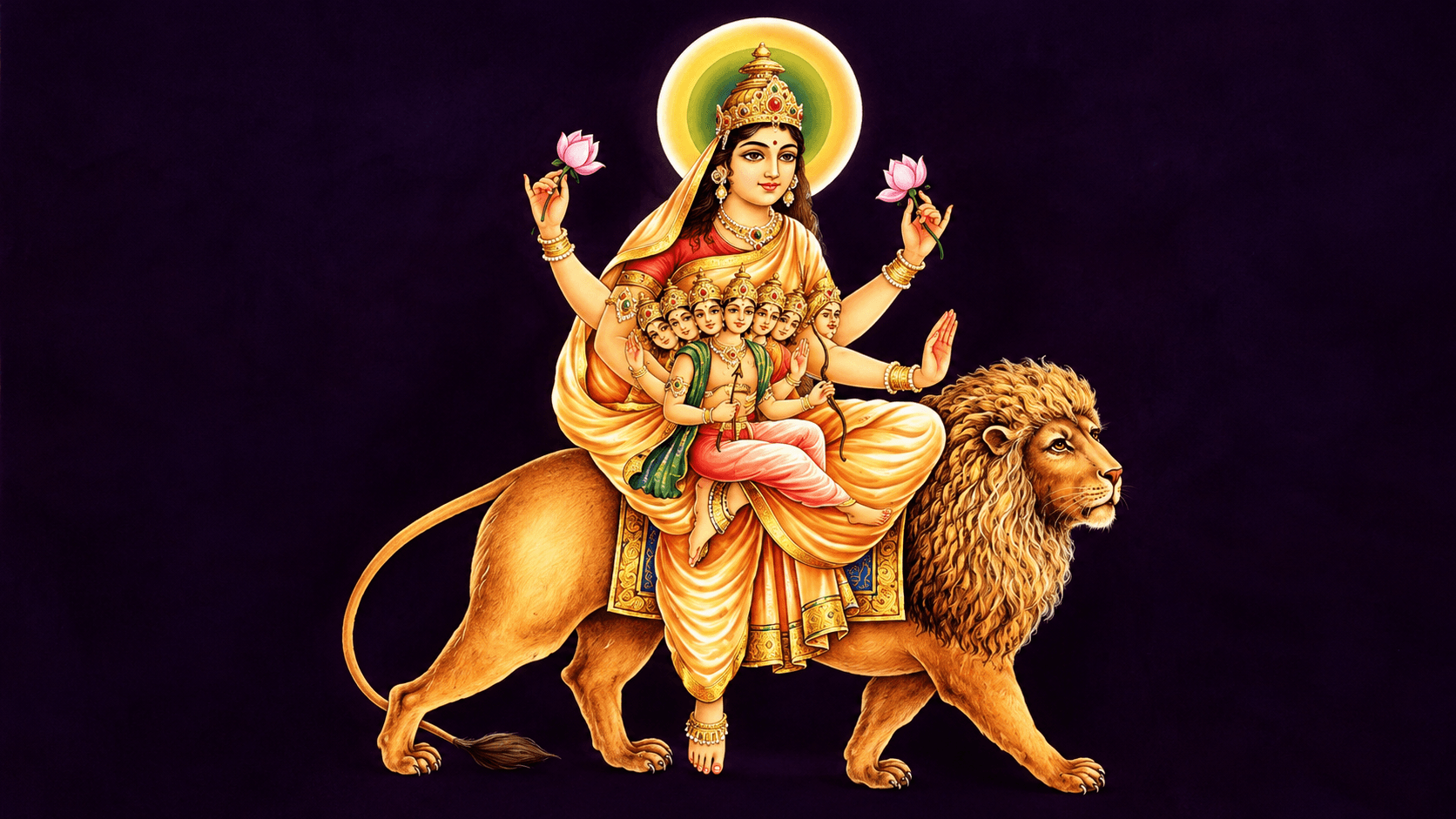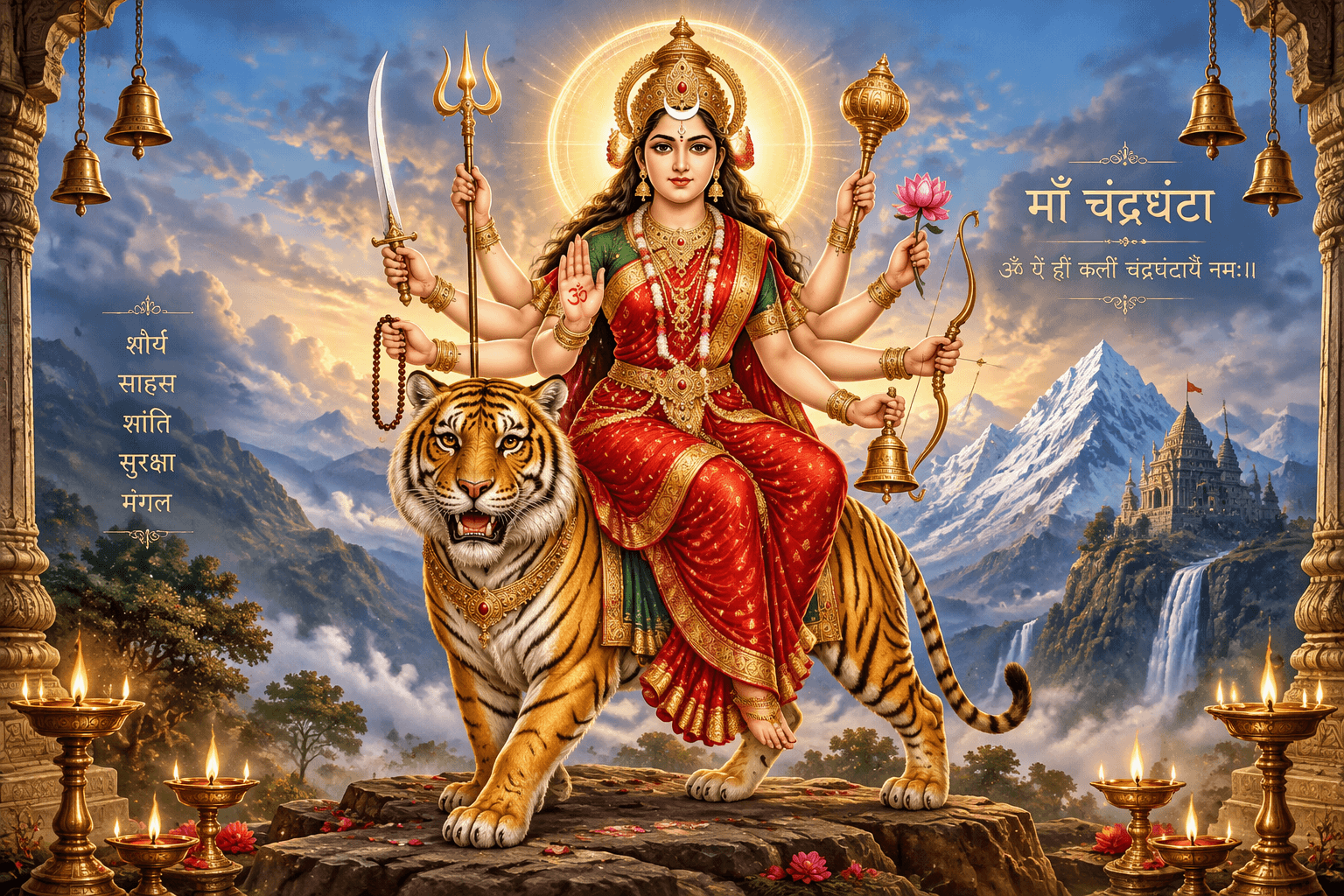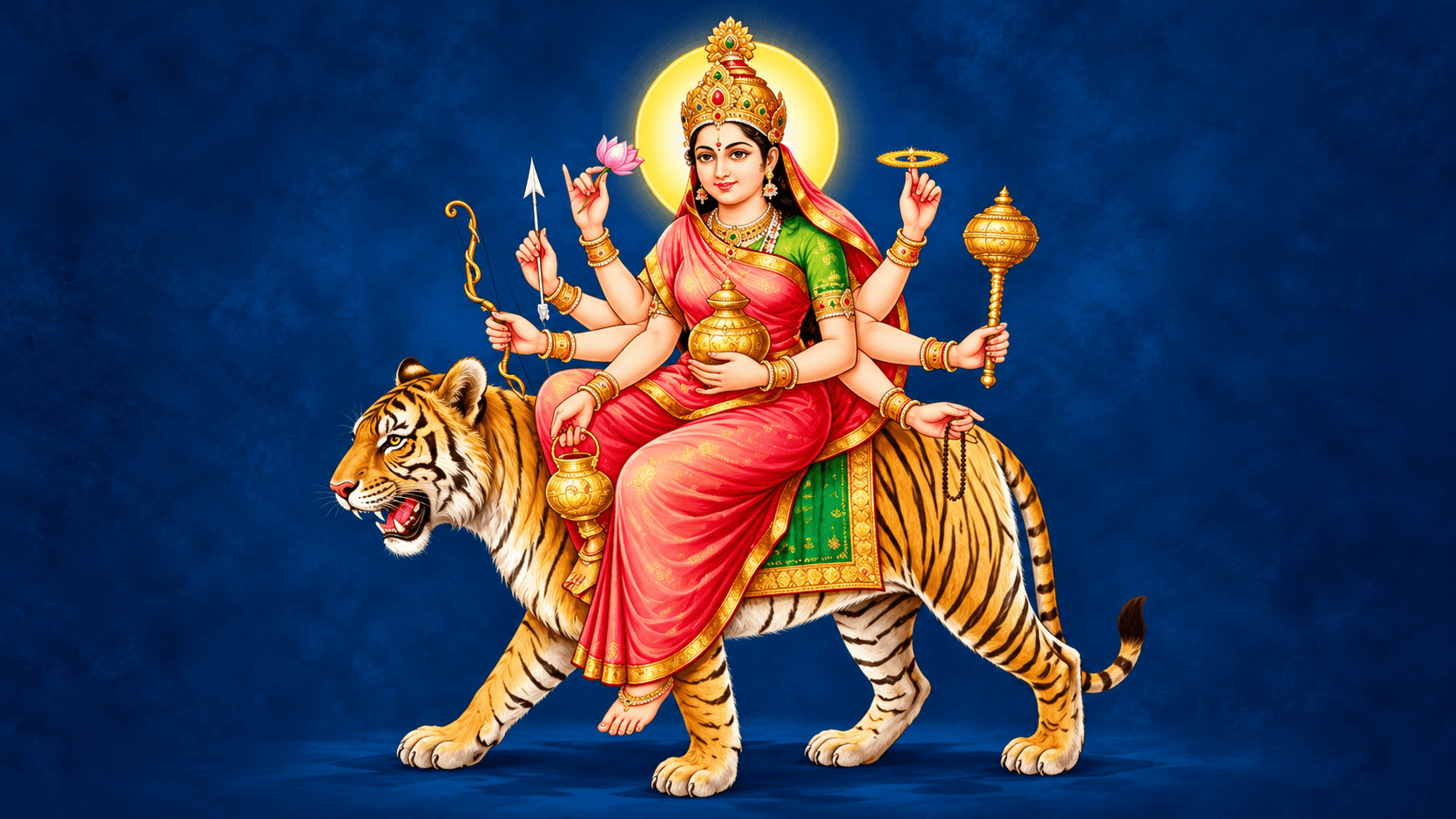
The fourth day of Sharad Navratri, Wednesday, 14th October 2026, is dedicated to Maa Kushmanda, the fourth form of Goddess Durga. According to Hindu tradition, she is believed to have created the universe with her divine smile, bringing light and life into a dark and empty cosmos. Her name reflects her connection with the creation of the universe, and she is worshipped as the source of energy and positivity. Devotees pray to Maa Kushmanda for good health, strength, happiness and prosperity. Worshipping her on this auspicious day is believed to remove negativity, bring inner peace and fill life with renewed energy and hope.
Who is Maa Kushmanda?
Her name is usually explained as ku (a little), ushma (warmth or energy) and anda (the cosmic egg): the one who produced the universe from a small spark of energy. Kushmanda is also the Sanskrit word for the ash gourd, which is why this vegetable is linked with her worship. As she has eight arms, she is also called Ashtabhuja Devi.
The Story of Maa Kushmanda
According to Hindu tradition, before the creation of the universe, there was only darkness, with no light, life or existence. It is believed that Maa Kushmanda brought the universe into existence with her gentle divine smile. From her smile, the cosmic egg appeared, marking the beginning of creation, and light gradually spread in every direction. Her divine energy filled the empty universe, bringing warmth, life and hope to the world.
Maa Kushmanda is also believed to reside at the core of the sun, giving it the energy and power to shine brightly. Her radiance is compared to the brilliance of the sun, symbolising her limitless strength and divine presence. Devotees believe that her blessings bring positivity, good health and the strength to overcome darkness and difficulties in life.
Symbolism and Iconography
Maa Kushmanda is represented in the following way:
-
Vehicle: A lion.
-
Arms: Eight arms, holding a kamandalu, bow, arrow, lotus, a pot of nectar, a discus (chakra), a mace and a japa mala.
-
Expression: A gentle smile.
The pot of nectar is linked with health and long life, which is why devotees pray to her for their wellbeing.
Maa Kushmanda Puja Vidhi at Home
Here is a simple puja vidhi to pray to Maa Kushmanda at your home:
-
Bathe early and wear clean clothes.
-
Clean the altar, sprinkle Gangajal and worship the kalash.
-
Place a picture of Maa Kushmanda and offer red flowers, kumkum, sandalwood and akshat.
-
Light a ghee lamp and incense.
-
Chant her dhyana mantra and stuti.
-
Offer the bhoga. If available, a whole ash gourd (white pumpkin) can be placed before the altar.
-
Perform aarti and distribute prasad.
Maa Kushmanda Mantra
Dhyana mantra
सुरासम्पूर्णकलशं रुधिराप्लुतमेव च।
दधाना हस्तपद्माभ्यां कूष्माण्डा शुभदास्तु मे॥
Surasampurna-kalasham rudhiraplutam eva cha, dadhana hasta-padmabhyam kushmanda shubhadastu me.
Meaning: May Goddess Kushmanda, who holds two filled pots in her lotus hands, bestow auspiciousness on me. Traditional commentators read the pots symbolically as the fullness of life she gives to her devotees.
Stuti
या देवी सर्वभूतेषु माँ कूष्माण्डा रूपेण संस्थिता।
नमस्तस्यै नमस्तस्यै नमस्तस्यै नमो नमः॥
Simple mantra: ॐ देवी कूष्माण्डायै नमः (Om Devi Kushmandayai Namah)
Bhoga and Colour for Day 4
The following is the bhoga and colour of Day 4:
Bhoga: Malpua is the best-known offering on Day 4. Petha (a sweet made from ash gourd), halwa and curd are also traditional. Keep the bhoga sattvic.
Colour: In the weekday-based tradition followed in Maharashtra, Day 4 in 2026 falls on a Wednesday and the colour is royal blue. Other regions use different lists.
A Devotional Reflection: Energy That Works Under the Lord's Direction
Maa Kushmanda's story is about creation. In the Bhagavad Gita (9.10), Lord Krishna explains how creation works:
मयाध्यक्षेण प्रकृतिः सूयते सचराचरम्।
Mayadhyakshena prakritih suyate sa-characharam
"Material nature, working under My direction, produces all moving and non-moving beings." The Vaishnava tradition sees the creative power of the Goddess in this light: a vast energy that acts under the Supreme Lord's supervision.
Seeing the world this way changes how a devotee uses it. Health, energy and resources are gifts to be used in service, not just for ourselves. Day 4 is a good day to offer some of our own energy in seva at the temple or at home.
Maa Kushmanda reminds us that all energy, light and life come from a source greater than ourselves. Her smile is said to have brought light into a dark cosmos, and the Bhagavad Gita explains that nature works under the Lord's direction. As you offer malpua, place an ash gourd before the altar and chant her mantra; you can pray for good health and energy. Then use that energy well: offer some of your time to seva, at the temple or at home.
May Maa Kushmanda bless you and your family with health, vitality and devotion. To put your energy into service, join the community at ISKCON Bhiwandi, where you can take part in kirtans, festivals and seva throughout the year.
FAQs
When is Navratri Day 4 in 2026?
Navratri Day 4, dedicated to Maa Kushmanda, falls on Wednesday, 14 October 2026.
Why is the ash gourd offered to Maa Kushmanda?
Kushmanda is the Sanskrit name for the ash gourd, so the vegetable and sweets made from it, such as petha, are linked with her worship.
Why is she called Ashtabhuja Devi?
She has eight arms, and Ashtabhuja means eight-armed.
What is the main bhoga for Navratri Day 4?
Malpua is the best-known offering, along with petha, halwa and curd.