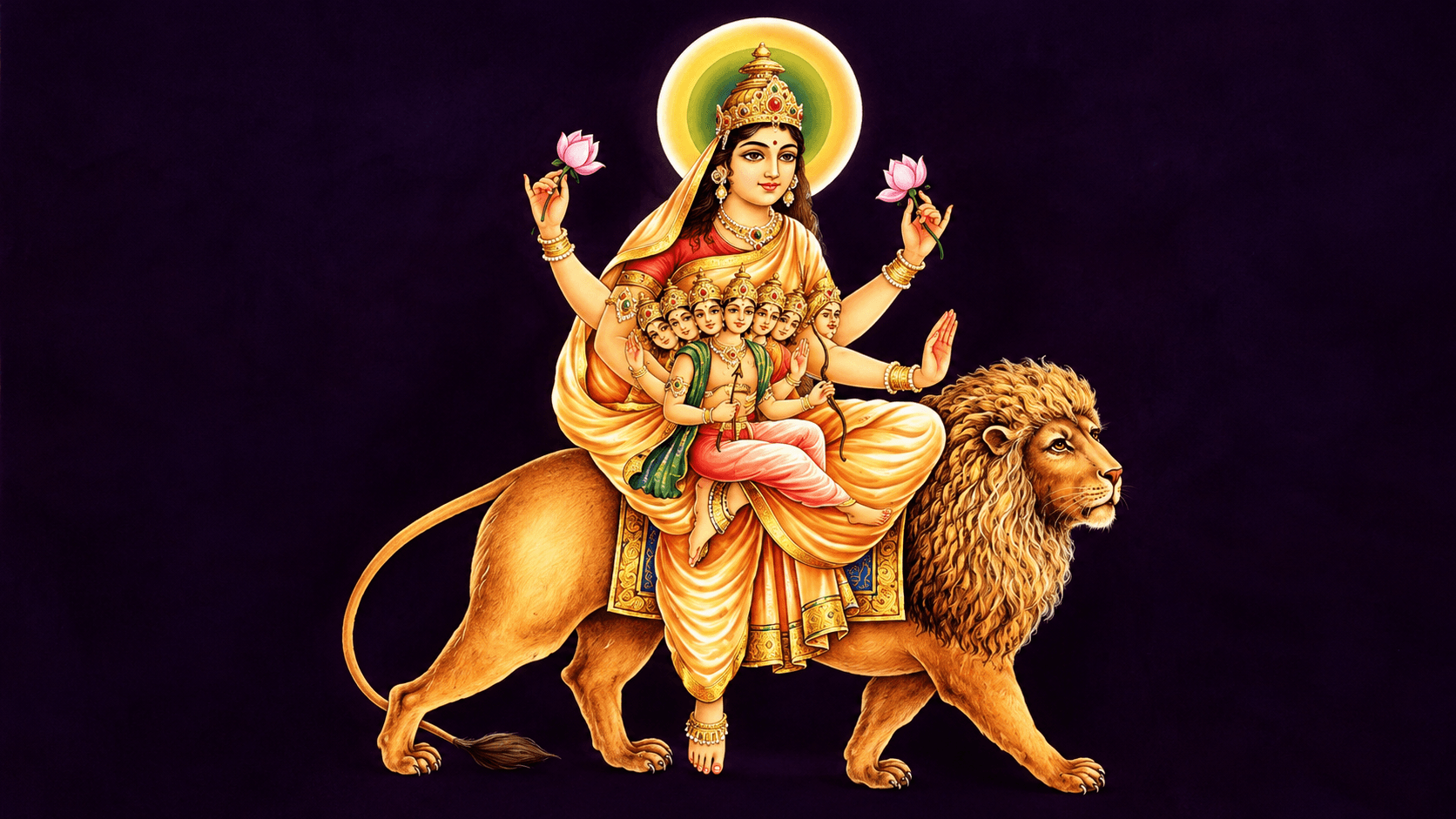
On Thursday, 15th October 2026, the fifth day of Sharad Navratri, devotees worship Maa Skandamata, the loving and motherly form of Goddess Durga. She is depicted holding her son Skanda, also known as Lord Kartikeya, on her lap, symbolising a mother’s unconditional love, care and protection. As the fifth form of Navdurga, Maa Skandamata represents kindness, compassion and the powerful bond between a mother and her child.
Devotees believe that worshipping her with a pure heart brings peace, strength, wisdom and happiness into their lives. On this auspicious day, they offer prayers and seek her divine blessings for the good health, prosperity and wellbeing of their families. Her worship reminds devotees of the importance of selfless love, patience and devotion in everyday life.
Who is Maa Skandamata?
Her name means "mother of Skanda." Skanda, also known as Kartikeya, Murugan and Subrahmanya, is the son of Shiva and Parvati and the commander of the army of the gods. As she is shown seated on a lotus, she is also called Padmasana Devi. Her serene form represents compassion, maternal love and inner strength. Devotees worship her with faith and seek her blessings for wisdom, peace and the well-being of their families.
The Story of Maa Skandamata
The demon Tarakasura had received a boon that only a son of Lord Shiva could kill him, and he troubled the gods without fear. After Shiva and Parvati were united, Skanda was born. He grew into a great warrior, led the gods into battle and defeated Tarakasura. His victory brought relief to the gods and restored peace in the divine realm.
As the mother who raised and empowered this protector of the gods, Parvati is worshipped as Skandamata. Her form reflects the strength and compassion of motherhood, showing how a mother can nurture courage and purpose in her child. Devotees believe that worshipping her also brings the blessings of her son. On the fifth day of Navratri, devotees pray to her for strength, wisdom, peace and protection for themselves and their families.
Symbolism and Iconography
Maa Skandamata is represented in the following manner:
-
Vehicle: A lion.
-
Arms: Four arms. Two hold lotus flowers, one holds the child Skanda on her lap, and one is raised in blessing (abhaya mudra).
-
Seat: A lotus.
-
Complexion: Fair and radiant.
Maa Skandamata Puja Vidhi at Home
Here is a simple step-by-step way to worship Maa Skandamata at home:
-
Bathe early and wear clean clothes.
-
Clean the altar, sprinkle Gangajal and worship the kalash.
-
Place a picture of Maa Skandamata with the child Skanda on the altar.
-
Offer yellow flowers, kumkum, sandalwood and akshat. A lotus can be offered if available.
-
Light a ghee lamp and incense.
-
Chant her dhyana mantra and stuti.
-
Offer the bhoga and perform aarti.
Maa Skandamata Mantra
Dhyana mantra
सिंहासनगता नित्यं पद्माञ्चितकरद्वया।
शुभदास्तु सदा देवी स्कन्दमाता यशस्विनी॥
Simhasana-gata nityam padmanchita-karadvaya, shubhadastu sada devi skandamata yashasvini.
Meaning: May the glorious Goddess Skandamata, who is always seated on a lion and holds lotuses in two of her hands, always bestow auspiciousness.
Stuti
या देवी सर्वभूतेषु माँ स्कन्दमाता रूपेण संस्थिता।
नमस्तस्यै नमस्तस्यै नमस्तस्यै नमो नमः॥
Simple mantra: ॐ देवी स्कन्दमातायै नमः (Om Devi Skandamata Yai Namah)
Bhoga and Colour for Day 5
The bhoga and colour for day 5 are:
Bhoga: Bananas are the traditional offering to Maa Skandamata. Kheer and other simple sweets are also offered. Keep the bhoga sattvic.
Colour: In the weekday-based tradition followed in Maharashtra, Day 5 in 2026 falls on a Thursday, and the colour is yellow. Other regions use different lists.
A Devotional Reflection: The Mother Who Prepares Her Child
Maa Skandamata did more than care for her son. She raised him to face the greatest danger of his time. The Srimad Bhagavatam (5.5.18) sets a high standard for parents: one should not become a father or mother unless one can help one's dependents become free from repeated birth and death.
This verse gives Day 5 a practical focus for families. Children learn devotion mainly by watching their parents: the family altar, the kirtan at home, the prayer before meals, the visit to the temple. Day 5 is a good day for parents to bring their children to the temple, tell them a story from the scriptures, or chant together at home.
Maa Skandamata shows the love and protection of a mother who raised her son to face the greatest danger of his time. Her worship is also a reminder for parents that children learn devotion mainly by watching the example set at home. As you offer bananas, chant her mantra and complete your Day 5 puja, you can pray for the wellbeing of your family. Then take one practical step: bring your children to the temple, tell them a story from the scriptures, or chant together at home.
May Maa Skandamata bless you and your family with love, protection and devotion. To bring your family closer to devotion, join the community at ISKCON Bhiwandi, where you can take part in kirtans, festivals and seva throughout the year.
FAQs
When is Navratri Day 5 in 2026?
Navratri Day 5, dedicated to Maa Skandamata, falls on Thursday, 15th October 2026.
Who is Skanda?
Skanda, also called Kartikeya or Murugan, is the son of Shiva and Parvati. He led the gods and defeated the demon Tarakasura.
What bhoga is offered to Maa Skandamata?
Bananas are the traditional bhoga on Day 5.
Why is she called Padmasana Devi?
She is shown seated on a lotus (padma), so she is also known as Padmasana Devi.