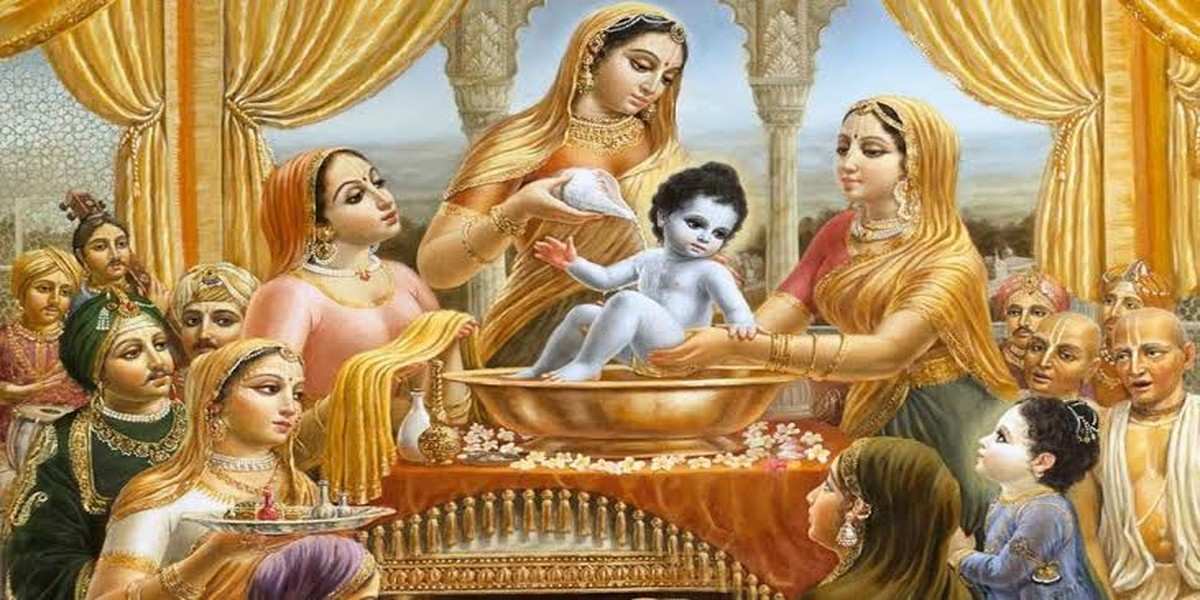
Every Janmashtami, devotees express their love for Lord Krishna in different ways. Some observe a fast until midnight. Others spend the day chanting the Hare Krishna Mahamantra, listening to Krishna-katha, or helping prepare prasadam for the thousands of devotees who visit the temple.
Then some quietly ask a different question:
“How can I offer something to Krishna on His appearance day?”
That simple thought captures the true spirit of daan.
In the Vedic tradition, giving is not measured by the size of the offering but by the consciousness behind it. When an offering is made with devotion and without expectation of personal gain, it becomes an act of Bhakti. This is why the Benefits of daan on Janmashtami are understood very differently from ordinary charity.
Why Daan (Donation) Matters on Janmashtami?
Janmashtami celebrates the appearance of Lord Krishna. On such a sacred day, devotees naturally wish to give something back, as an expression of love.
Think about how we celebrate the birthday of someone close to us. We prepare gifts, cook their favourite meal, or spend time making them feel special. Janmashtami follows the same principle, but with a deeper spiritual understanding. The Lord is complete in every way, yet He lovingly accepts even the smallest offering when it is made with devotion.
That is why devotees often describe Janmashtami as a day of gratitude rather than obligation. Supporting temple activities, sponsoring prasadam, helping care for cows, or contributing towards the spread of Krishna consciousness all become ways of expressing that gratitude.
Krishna’s “Birthday” - Giving Back to the One Who Gives Everything
It may seem unusual to speak of giving something to the Supreme Lord, who is the source of everything in existence.
Yet this is precisely what makes Janmashtami so special.
Krishna does not ask for expensive gifts. Instead, he invites us to offer services to his devotees. For one devotee, that may mean volunteering in the temple kitchen. For another, it may be sponsoring a meal for visitors. Someone else may help decorate the temple, distribute books that spread Krishna Consciousness, or support a festival that allows thousands of people to hear about Krishna for the first time.
Seen from this perspective, what to donate on Janmashtami becomes a much broader question than simply giving money.
Sometimes the most meaningful offering is your time, your skills, or your resources.
And sometimes it is simply your willingness to serve without expecting anything in return.
That thought process lies at the heart of Bhakti.
Spiritual Benefits of Daan
People often associate charity with earning merit or receiving blessings. While the scriptures certainly acknowledge these results, ISKCON places the emphasis elsewhere.
The greatest among the Benefits of Daan is that it gradually softens the heart.
When we give in Krishna’s service, we learn to reduce our attachment to possessions and recognise that everything we have is a gift from Him. This shift in consciousness is far more valuable than the material act of giving itself.
Devotional giving also strengthens qualities that every spiritual seeker hopes to develop, including humility, compassion, gratitude, and selflessness. Instead of asking, “What can I receive?”, the mind begins asking, “How can I serve?”
That subtle change marks an important step in one’s spiritual journey.
When an offering helps someone hear the holy name, honour prasadam, read spiritual literature, or visit a temple, its impact extends far beyond the moment it was made.
How Daan Connects to Karma & Punya?
The Vedic scriptures explain that every action creates a reaction. Acts of kindness and charity performed with good intentions generate punya, or spiritual merit. However, the Bhagavad Gita also teaches that actions performed solely for personal reward continue to bind one to material results.
This is where devotional giving becomes unique.
When an offering is made for Krishna’s pleasure rather than one’s own recognition, it becomes an act of seva. Instead of being motivated by prestige or expectation, it is offered with humility and gratitude.
ISKCON teaches that charity offered in devotion helps purify the heart because it shifts the focus away from the self and towards Krishna.
That is why devotees treasure opportunities to give on Janmashtami. The value of the offering is not measured in currency but in the sincerity with which it is placed before the Lord.
What to Donate on Janmashtami?
One of the most common questions devotees ask before Janmashtami is, “What to donate on Janmashtami?”
There isn’t a single prescribed answer.
The scriptures do not say that one particular offering is greater than another. Instead, they teach that an offering made with devotion, honesty, and a desire to serve Krishna is always meaningful.
Some devotees contribute financially. Others volunteer their time. Some prepare food, while others quietly help with cleaning the temple after the celebrations are over. Every service performed with the right consciousness becomes an offering to the Lord.
If you are wondering what to donate on Janmashtami, here are some meaningful ways to participate in Krishna’s service.
Food & Annadaan (Prasadam Sponsorship)
If there is one form of charity that beautifully reflects ISKCON’s mission, it is prasadam distribution.
On Janmashtami, thousands of visitors come to temples seeking darshan, kirtan, and spiritual association. Many also receive sanctified food that has first been lovingly offered to Lord Krishna.
This is why sponsoring prasadam is considered a deeply meaningful offering.
Unlike ordinary food distribution, prasadam carries spiritual significance because it has been prepared for Krishna and offered to Him with devotion. When people honour prasadam, they receive not only nourishment for the body but also an opportunity to connect with Krishna.
If you wish to participate, you may choose to sponsor:
- Annadaan for devotees and visitors.
- Fruits for the Lord’s offerings.
- Milk, butter, yoghurt, and sweets used in festival bhoga.
- Rice, vegetables, flour, pulses, and other ingredients used in preparing prasadam.
- Water distribution for pilgrims and visitors during the festival.
Many ISKCON temples also welcome sponsorships for entire prasadam programmes during Janmashtami.
Supporting these efforts allows countless people to participate in the festival and honour Krishna’s mercy through prasadam.
Clothes, Essentials & Monetary Donations
Not every offering has to be elaborate.
Sometimes a simple contribution helps ensure that the Lord’s festival is celebrated beautifully and that the temple can continue serving the community throughout the year.
If you’re considering what to donate on Janmashtami, you may offer:
- Monetary contributions towards temple maintenance or Janmashtami celebrations.
- Ingredients for Abhishek and bhoga
- New clothes for the Deities.
- Fresh flower garlands.
- Ghee for lamps and arati.
- Incense, camphor, and puja items.
- Festival decorations.
- Clothes or food for those in need or charity to temples that are helping them.
Many devotees also choose to sponsor specific services, such as flower decoration, deity dresses, festival lighting, or cultural programmes that help visitors learn about Lord Krishna.
Supporting these activities allows the temple to continue sharing Krishna consciousness with thousands of people, especially during major festivals.
Seva to Sadhus & Devotees
One of the most beautiful forms of giving is offering service to those who have dedicated their lives to Krishna.
Throughout the scriptures, serving Sadhus is described as a powerful way to deepen one’s own devotional life. ISKCON continues this tradition by encouraging devotees to support these spiritual teachers.
You may help out with making arrangements and contributions that help them add to their Bhakti and preaching work more conveniently. These acts may appear simple, but they contribute immensely to the smooth celebration of the festival.
Many devotees later say that the most memorable part of their Janmashtami was not what they offered, but the opportunity they had to serve.
Who to Donate to?
Choosing what to donate on Janmashtami is only one part of the decision. Equally important is choosing where that offering will have the greatest spiritual impact.
The Bhagavad Gita explains that charity offered at the proper place, at the proper time, and to a worthy recipient, without expecting anything in return, is charity in the mode of goodness.
With this understanding, devotees often choose to support activities that directly assist Krishna’s service and benefit others spiritually.
Temples & Priests
For ISKCON devotees, supporting the temple means supporting the Lord’s daily worship and the mission of spreading Krishna consciousness.
Temple donations help sustain activities such as:
- Daily deity worship.
- Janmashtami and other festival celebrations.
- Bhagavad Gita classes.
- Children’s spiritual education.
- Prasadam distribution.
- Book publication and distribution.
- Temple maintenance.
Rather than viewing this only as an act of donation, devotees see it as participating in Krishna’s service.
Even a small contribution, when offered with devotion, becomes meaningful. The spirit behind every offering remains the same: serving Krishna by serving His creation with compassion and devotion.
Giving with the Right Consciousness
It is possible for two people to make the same donation and yet receive very different spiritual results.
One person may give to gain recognition. Another may give quietly, expecting nothing in return. Outwardly, the offering looks identical. Inwardly, the intention is completely different.
This distinction is beautifully explained in the Bhagavad Gita. Lord Krishna describes charity performed at the proper time, in the proper place, and to a worthy recipient, without expecting anything in return, as charity in the mode of goodness. Such giving gradually purifies the heart because it is motivated by service rather than self-interest.
That is the spirit in which devotees approach Janmashtami.
The Heart of Daan is Seva
In everyday life, the word “donation” often is construed as to giving away something we no longer need.
Bhakti teaches something different.
A true offering is not made because something has little value to us. It is made because Krishna is valuable to us.
That is why ISKCON places such importance on seva, loving devotional service. Whether someone contributes financially, cooks for the Lord, arranges flowers, welcomes guests, or distributes prasadam, each service becomes an offering when performed with devotion.
A teacher may educate children about the Bhagavad Gita.
A musician may lead kirtan.
A doctor may volunteer at a medical camp organised by the temple.
A business owner may sponsor festival arrangements.
Someone with very little money may still offer their time with complete sincerity.
None of these services is considered greater than another. What matters is the desire to serve.
Giving Beyond Money
One of the most inspiring aspects of Janmashtami is seeing how differently devotees choose to serve.
Some quietly sponsor the day’s flower decorations.
Others wake before sunrise to clean the temple before the crowds arrive.
Young volunteers help organise queues for darshan.
Families prepare vegetables for the temple kitchen.
None of these services carries a price tag, yet each one contributes to the celebration.
In ISKCON, service is never measured only by financial value. The willingness to offer one’s time, energy, skills, and enthusiasm is equally cherished.
If someone asks, “What to donate on Janmashtami if I cannot make a financial contribution?”, the answer is simple.
Offer your service, your time, your talents.
Krishna lovingly accepts every sincere offering.
A Lesson from Sudama
One of the most touching examples of devotional giving comes from the pastime of Sudama Brahmana, a childhood friend of Lord Krishna.
Sudama was extremely poor. When he decided to visit Krishna in Dwaraka, he felt embarrassed because he had nothing valuable to offer. His wife gathered a small handful of flattened rice tied it in a cloth, and asked him to take it as a gift.
When Sudama met Krishna, the Lord welcomed him with immense affection. Seeing the humble offering, Krishna joyfully accepted it as though it were the greatest treasure.
The significance of this Leela is profound.
Krishna established that he wasn’t pleased because the gift was expensive, but because it was offered with pure love.
This story beautifully captures the true Benefits of daan. The Lord does not measure an offering by its size but by the devotion behind it.
Frequently Asked Questions
1. Is there a specific time when daan should be given?
Janmashtami itself is considered an especially auspicious day for offering charity and engaging in seva. Many devotees prefer to make their offering within the auspicious time period (muhurt) of the day while participating in the day’s devotional activities.
That said, the scriptures place greater emphasis on the consciousness behind the offering than on the exact hour it is given.
2. Does the type of donation affect the spiritual benefit?
The value of an offering is not determined by its monetary worth.
A large financial contribution made for recognition does not carry the same spiritual significance as a simple offering made with humility and devotion.
In the Bhagavad Gita (17.20), Lord Krishna explains that charity offered at the proper place, to a worthy recipient, without expecting anything in return, is charity in the mode of goodness.
Whether you choose to sponsor prasadam, contribute towards temple worship, support cow protection, offer flowers, volunteer your time, or assist devotees through seva, the greatest Benefits of daan arise from the devotion behind the offering.
3. Can daan be given on behalf of someone else, such as a family member or ancestor?
Yes, many devotees choose to make offerings while praying for the spiritual welfare of their parents, children, family members, or departed loved ones.
It symbolises your love for your loved ones, and the Lord accepts every offering made with love with equal significance.
Conclusion
When people ask about the Benefits of daan, they often expect a list of blessings they might receive in return.
Krishna consciousness invites us to look at the question differently.
Instead of asking, “What will I gain?”, Janmashtami encourages us to ask, “What can I lovingly offer?”
Whether the offering is a handful of flowers, a simple meal prepared for prasadam, support for the temple, care for cows, assistance to devotees, or a few hours of sincere seva, every act performed for Krishna’s pleasure becomes spiritually meaningful.
The greatest transformation does not happen outside us. It happens within.
As attachment to possessions gradually gives way to gratitude and service, the heart becomes more receptive to devotion. This inner change is among the most precious Benefits of daan and one that extends far beyond Janmashtami.
May this sacred festival inspire all of us to give a little more, serve a little more, and remember Lord Krishna with greater love.