Introduction
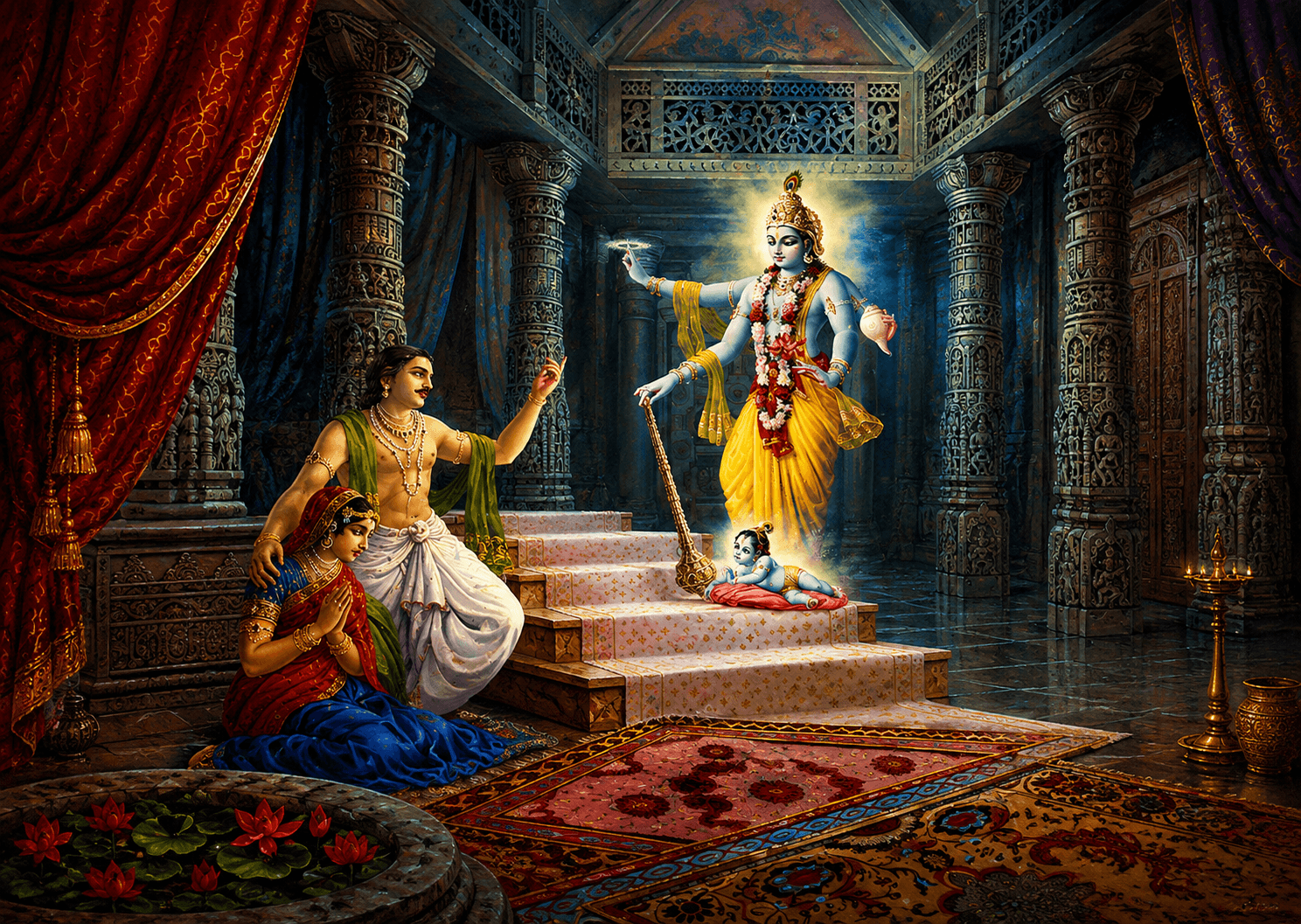
If you have ever visited an ISKCON temple on Janmashtami, one thing quickly becomes apparent. Thousands of devotees spend the day without regular meals, yet the atmosphere remains vibrant and full of devotion. The temple resonates with joyful kirtans, the fragrance of flowers fills the air, scriptures are recited throughout the day, and everyone eagerly waits for midnight, the sacred hour of Lord Krishna’s appearance.
This often raises a question for newcomers: Why fast on Janmashtami? Is it simply a religious custom, or does it hold a deeper spiritual purpose?
According to the Gaudiya Vaishnava tradition followed by ISKCON, Janmashtami fasting is not about punishing the body or proving one’s endurance. It is about creating more time and space to remember Lord Krishna. By eating less, devotees try to hear more about Krishna, chant His holy names with greater attention, and participate wholeheartedly in devotional service.
Whether you are planning to observe your first Krishna Janmashtami fast or wish to understand its deeper significance, this guide explains the purpose of the vrata, the different ways it can be observed, the Janmashtami fast rules, and the many Janmashtami vrata benefits described in the scriptures.
What is Janmashtami Fasting (Upvas)?
The word upvas is often translated simply as “fasting,” but its meaning is much deeper.
In Sanskrit, upa means “near”, and vas means “to reside.” Together, the word suggests drawing closer to God. In other words, Janmashtami upvas is not merely about giving up food. It is about reducing worldly distractions so that the mind can remain absorbed in Krishna.
That is why devotees spend the day making more time to take part in spiritual activities such as reading scriptures, attending the temple, and doing kirtan.
Food restrictions certainly form a part of the observance, but they are never the ultimate goal. The fast is simply a tool that helps cultivate self-discipline and deepens one’s remembrance of Krishna.
Many first-time observers wonder whether they are fasting correctly. They don’t know for sure what is allowed, how much time they should fast for, when to break the fast, etc.
The answer is reassuring. Devotees have different ages, health conditions, and responsibilities. While the mood of devotion remains the same for everyone, the way each person observes Krishna Janmashtami upvas may vary according to their capacity and guidance from senior devotees.
Meaning and Purpose of the Vrata
Every vrata in the Vedic tradition is an opportunity to strengthen one’s relationship with the Lord, and Janmashtami is no exception.
The purpose of the Krishna Janmashtami fast is to welcome Lord Krishna’s appearance with a heart that is peaceful, grateful, and focused on Him. Rather than spending the day planning meals or satisfying the senses, devotees consciously redirect that energy towards devotional activities.
Seen in this light, the fast becomes much more than an external practice. It is a loving offering made to Krishna on His appearance day.
A Fast that Nourishes the Soul
Interestingly, many devotees describe feeling spiritually energised on Janmashtami, even after eating very little throughout the day.
The reason, they explain, is simple. The day is filled with kirtan, seva, scriptural discussions, deity darshan, and the joyful anticipation of celebrating Lord Krishna’s appearance at midnight. The mind naturally remains engaged in devotional service, leaving little room for ordinary distractions.
When observed with the right mindset, Janmashtami fasting becomes a celebration rather than a hardship, and the vrata leaves the heart feeling lighter long after the fast has ended.
Types of Janmashtami Fasting
It is a misconception that everyone has to observe Janmashtami fasting in the same way. In reality, devotees follow different forms of the vrata depending on their health, age, daily responsibilities, and spiritual guidance.
The purpose of the fast is not to compare one’s austerity with others. It is to spend the appearance day of Lord Krishna in greater remembrance of Him. Whether someone observes a strict fast or a simpler one, the mood should always be one of humility, gratitude, and devotion.
If this is your first Krishna Janmashtami fast, it is perfectly acceptable to begin with a form of fasting that is sustainable. ISKCON encourages sincere devotional practice rather than unnecessary hardship.
Let us look at the three most commonly observed types of Janmashtami upvas.
Nirjala (Waterless) Fast
Among all forms of fasting, the Nirjala fast is considered the most austere. As the name suggests, it involves abstaining from both food and water until the Janmashtami midnight worship or until the prescribed time for breaking the fast, depending on one’s tradition.
This type of Krishna Janmashtami upvas is usually observed by experienced devotees who are physically fit and accustomed to stricter vrata practices. It should never be undertaken simply to imitate others.
If health conditions, medication, pregnancy, or age make a waterless fast difficult, devotees are encouraged to choose a milder form of fasting. Krishna values sincerity more than severity.
Phalahar (Fruit & Milk) Fast
For many devotees, a Phalahar fast offers a balanced way to observe Janmashtami while remaining physically comfortable throughout the day.
In this form of Janmashtami fasting, grains, pulses, regular meals, and processed foods are avoided. Instead, devotees consume light, sattvic foods such as fruits, milk, nuts, and other vrata-friendly preparations.
Common choices include:
- Fresh seasonal fruits.
- Milk or buttermilk.
- Dry fruits and nuts.
- Coconut water.
- Makhana (fox nuts).
- Sabudana preparations.
- Sama rice or barnyard millet dishes, as traditionally followed.
This option is especially suitable for working professionals, elderly devotees, beginners, and anyone who may find a complete fast difficult.
While eating is limited, the emphasis continues to be on hearing about Krishna and participating in devotional activities throughout the day.
Satvik/ Partial Fast
A Satvic/ Partial Fast allows devotees to honour Janmashtami while eating simple vegetarian meals prepared without onion, garlic, grains, or ingredients avoided during the vrata, according to local temple guidance, once a day.
This approach is sustainable as one would have energy to last until midnight, and it’s a favourable choice among senior citizens, working professionals, children, nursing mothers, people with medical conditions such as diabetes, etc.
Speak with your family, healthcare professional, and spiritual master before deciding how to observe the fast.
The essence of Krishna Janmashtami upvas is not hunger. It is conscious remembrance of Krishna.
Which type of Fast should you choose?
If you’re observing Janmashtami Vrata for the first time, it’s natural to wonder which option is right for you.
A simple way to decide is to ask yourself one question:
Will this type of fast help me remember Krishna better throughout the day?
If the answer is yes, you’ve likely chosen the right approach.
If a strict fast leaves you exhausted, distracted, or unable to participate in kirtan, japa, or scripture reading, then a lighter observance may actually support your devotional practice more effectively.
Many senior ISKCON devotees advise newcomers to begin gradually. Developing steady devotional habits is more valuable than attempting severe austerities that cannot be maintained.
As Srila Prabhupada often emphasised, Krishna consciousness is built through sincere and consistent devotional service. Fasting is one part of that process.
Janmashtami Fast Rules - Do’s and Don’ts
When people hear the word “vrata”, they often think of a list of foods to avoid. But if you ask a senior ISKCON devotee about the Janmashtami fast rules, they are just as likely to speak about chanting, hearing and serving Krishna as they are about food.
That is because the fast is only one part of the observance. The real purpose of the day is to welcome Lord Krishna with a peaceful mind and a devotional heart.
If you’re observing Janmashtami fasting for the first time, don’t worry about making everything perfect. Follow the rules to the best of your ability, stay absorbed in Krishna’s remembrance, and perform the vrata with sincerity.
What’s allowed during the Fast
The foods permitted during Krishna Janmashtami upvas depend on the type of fast you have chosen. Someone observing Nirjala may not consume anything until the fast is broken, while those following a Phalahar or Satvik fast may have simple, vrata-friendly foods.
Generally, devotees consume foods that are light, pure, and easy to digest.
These may include:
- Fresh fruits such as bananas, apples, pomegranates, and papaya.
- Milk, yoghurt, and paneer.
- Dry fruits including almonds, cashews, walnuts, and raisins.
- Makhana (fox nuts).
- Coconut water.
- Sabudana preparations.
- Sama rice (barnyard millet).
- Sweet potatoes.
- Rock salt (sendha namak) instead of regular table salt.
Whatever you prepare, remember to offer it to Lord Krishna before eating. Once offered with devotion, it becomes prasadam, and honouring prasadam is itself an important part of devotional life.
What’s prohibited during the Fast
While the exact observance may vary slightly across traditions, ISKCON devotees generally avoid foods and activities that distract the mind from Krishna.
Foods commonly avoided include:
- Grains such as rice, wheat, barley.
- Lentils, pulses & beans.
- Processed snacks containing grain flour.
- Onion, garlic and other tamsic food.
- Intoxicants of every kind.
The vrata also encourages devotees to reduce unnecessary distractions.
As far as possible, avoid:
- Idle gossip.
- Excessive television or social media.
- Arguments and anger.
- Material entertainment.
- Activities that take the mind away from devotional remembrance.
Instead, create an atmosphere that supports hearing, chanting, and worshipping Lord Krishna.
Why Fast on Janmashtami? (Spiritual Significance)
Every year, someone new to Krishna consciousness asks the same question:
“If Krishna wants our love, why does He ask us to fast?”
The answer is both simple and beautiful.
He doesn’t.
Nowhere does Lord Krishna say that hunger alone pleases Him. What pleases Him is devotion.
The fast is a voluntary offering made by devotees as an expression of love on His appearance day. By setting aside ordinary comforts for a few hours, they create more room in their day to hear about Krishna, chant His holy names, and reflect on His teachings.
Think about how we celebrate the birthday of someone we deeply love. We set aside time for them, prepare special offerings, and make the day different from every other day. Janmashtami is much the same, except the person being honoured is the Supreme Personality of Godhead.
That is the deeper answer to why fast on Janmashtami.
The fast is not about deprivation.
It is about devotion.
Connection between Fasting and Devotion
Fasting by itself does not transform the heart.
Bhakti does.
If someone spends the entire day thinking only about food, they may have completed the fast physically but missed its spiritual purpose.
On the other hand, even a devotee observing a simple Janmashtami upvas because of health reasons can experience profound spiritual benefit if the day is spent remembering Krishna.
Spiritual activities strengthen one’s relationship with Krishna far more than fasting alone.
As Srila Prabhupada often reminded devotees, Krishna is bhava-grahi. He accepts the devotion behind an offering.
That is why the greatest success of Krishna Janmashtami fast is not measured by how little one eats but by how much one remembers Krishna.
Spiritual benefits of the Vrata
Ask a devotee who has been observing Krishna Janmashtami upvas for many years what keeps them returning to the vrata every year, and they are unlikely to mention physical discipline first.
Most will simply say, “It helps me remember Krishna.”
That, perhaps, is the greatest of all the Benefits of fasting on Janmashtami.
In the Gaudiya Vaishnava tradition, the purpose of every vrata is to increase one’s devotion to the Supreme Lord. Fasting becomes meaningful because it creates an opportunity to spend more time hearing Krishna-katha, chanting the Hare Krishna Mahamantra, serving devotees, and reflecting on the Lord’s teachings.
When observed with this mood, devotees often experience many Janmashtami vrata benefits, including:
A stronger connection with Krishna
By setting aside ordinary routines for a day, the mind naturally becomes more focused on the Lord’s appearance and His transcendental pastimes.
Greater self-discipline
Choosing simplicity over indulgence helps cultivate qualities such as patience, humility, and gratitude, all of which support steady progress in bhakti.
More attentive listening to scriptures
Many devotees notice that because the day is centred around spiritual practices, they can pay better attention with greater concentration and sincerity.
Increased appreciation for prasadam
After spending the day in devotional remembrance, honouring Krishna’s prasadam becomes a deeply grateful experience rather than an ordinary meal.
Joyful association with devotees
Whether at home or in the temple, Janmashtami brings devotees together for kirtan, seva, scriptural discussions, and celebrations. Such association is considered one of the greatest blessings in Krishna consciousness.
Ultimately, the Benefits of fasting on Janmashtami cannot be measured by how difficult the fast was. They are measured by how much closer one feels to Krishna by the end of the day.
How to break the Fast (Vrata Paran) correctly
Just as beginning the vrata with devotion is important, ending it properly is also considered an essential part of the observance.
The fast is traditionally broken at midnight, after worshiping the Lord with devotion, according to one’s convenience.
Before eating, it is customary to:
- Offer the prepared food to Lord Krishna.
- Recite prayers or chant the Hare Krishna Mahamantra.
- Honour the food as prasadam with gratitude.
- Eat moderately rather than rushing into a heavy meal after the fast.
Breaking the fast peacefully allows devotees to carry the devotional mood of Janmashtami into the following day.
Best foods to break the Fast with
After a day of Janmashtami fasting, it is best to begin with light, nourishing foods before returning to a regular diet.
Many devotees choose preparations such as:
- Fresh fruits.
- Lemon water or tender coconut water.
- Panchamrit.
- Milk or buttermilk.
- Khichdi prepared according to the day’s observance.
- Light vegetable preparations.
- Freshly offered prasadam from the temple.
- Homemade sweets offered to Lord Krishna.
Avoid overeating immediately after the fast. The purpose of Paran is not to compensate for the day’s restraint but to respectfully conclude the vrata by honouring Krishna’s prasadam.
Frequently Asked Questions
1. Is it mandatory to fast the full 24 hours?
No. The way Krishna Janmashtami fast is observed depends on one’s health, age, and circumstances.
Some devotees observe a Nirjala fast, while others take fruits, milk, or simple vrata-friendly foods. ISKCON encourages devotees to observe the vrata according to their capacity while keeping the mind absorbed in Krishna throughout the day.
2. Can children observe the Janmashtami vrata?
Yes, but children should not be expected to undertake strict austerities.
Many families encourage children to participate by eating simple sattvic foods, chanting the Hare Krishna Mahamantra, listening to the Lord Krishna birth story, helping prepare offerings, decorating the altar, or attending temple celebrations.
The aim is to nurture affection for Krishna from an early age rather than impose difficult fasting.
3. What is the correct time to break the fast?
The fast should be broken at midnight.
Conclusion
At first glance, Janmashtami fasting may seem like giving up food for a day. But anyone who has spent Janmashtami in the company of devotees soon realises that the festival is about receiving something far greater.
It is a day filled with kirtan instead of routine, scripture instead of distraction, seva instead of self-centredness, and joyful anticipation as devotees wait to welcome Lord Krishna at midnight.
That is why devotees continue to observe Krishna Janmashtami upvas year after year. The fast reminds us that true nourishment comes not only from what we eat, but from what we hear, remember, and offer to the Lord with love.
Whether you choose a strict fast or a simple one, let your observance be guided by sincerity rather than comparison. When the heart is filled with remembrance of Krishna, even a small offering becomes spiritually significant.
As Srila Prabhupada often taught, devotional service performed with love is always accepted by Krishna.
May this Janmashtami bring you closer to His lotus feet and inspire you to continue your journey in Krishna consciousness.