Krishna Janmashtami 2026: Date, Puja Vidhi & How to Celebrate
Introduction
The devotees eagerly wait for Krishna Janmashtami every year. The divine appearance day of Lord Krishna, who is Supreme Personality Godhead, appearing in this material world for giving pleasure to his devotees, to perform various loving pastimes with them and to attract attention of living entities lost in the material world, trying to find permanent happiness in the world labeled as Dukhalaya (House of Misery) and Ashashwatam (Temporary) by the creator, Lord Krishna himself. A celebration of ethereal compassion, his transcendental pastimes (Krishna Leela), and his promise to protect the righteous and innocent.
Krishna Janmashtami is one of the most auspicious days of the year for followers of gaudiya vaishnavism. Temples come alive with melodious kirtans, beautifully adorned deities, recitations of the scriptures, midnight arati, and elaborate offerings (bhog) prepared with love and devotion. Devotees also observe fasting, chant the Hare Krishna Mahamantra, and immerse themselves in hearing about Lord Krishna’s appearance from sacred scriptures such as the Srimad Bhagavatam.
Whether you are planning to visit an ISKCON temple or wondering how to celebrate Janmashtami at home, understanding the deeper significance of this sacred festival can make your observance more meaningful. Learn about the Janmashtami 2026 date and Janmashtami puja vidhi in detail to make your home celebrations filled with love and devotion.
When is Janmashtami 2026?
The Krishna Janmashtami 2026 festival will be observed on Friday, 4 September 2026, by ISKCON temples following the Vaishnava calendar.
Lord Krishna appeared at midnight in the prison of Mathura, where Vasudeva and Devaki were held captive by King Kamsa/ Kansa. For this reason, devotees eagerly wait until midnight to perform the main worship and celebrate His transcendental appearance.
While calendars may differ slightly depending on geographical location and the tradition being followed, devotees are encouraged to follow the schedule published by their nearest ISKCON temple.
For Krishna Janmashtami 2026, devotees/ temples will perform Abhishek and Aarti at midnight.
This sacred period celebrates the divine moment when Lord Krishna appeared in the prison in Mathura. ISKCON Temples across the world erupt into celebration at this moment, usually performing an elaborate abhishek (ceremonial bathing of the Lord), offering special bhoga, conducting midnight aarti, and singing kirtans.
Those celebrating the festival at home may also perform their Janmashtami puja vidhi during this auspicious period.
Janmashtami Puja Vidhi
The purpose of the Janmashtami puja vidhi is not merely to perform rituals, but to lovingly welcome Lord Krishna into our homes and hearts. Every offering, prayer, and devotional activity is an expression of gratitude towards the Supreme Lord.
Even if you are observing Janmashtami for the first time, the puja can be performed with simplicity and sincerity. Krishna Himself assures us in the Bhagavad Gita (9.26):
“If one offers Me with love and devotion a leaf, a flower, fruit or water, I will accept it.”
This verse beautifully reminds us that devotion is the true essence of worship.
Pre-Puja Preparations
Before beginning the worship, devotees prepare both their surroundings and their consciousness.
Clean the home or the space where the puja will be performed and decorate the altar with fresh flowers, leaves, lamps, and colourful rangoli if desired. Bathe and wear clean, modest clothing as a mark of respect while approaching the Lord.
If you have Deities of Sri Sri Radha Krishna, Laddu Gopal, or an image of Lord Krishna, gently decorate them with fresh garments, ornaments, flower garlands, and fragrant sandalwood paste.
Devotees spend the day:
- Chanting extra rounds of the Hare Krishna Mahamantra.
- Reading the Tenth Canto of Srimad Bhagavatam, which narrates Krishna’s divine appearance, or the Krishna book written by His Divine Grace A. C. Bhaktivedanta Swami Prabhupada.
- Listening to discourses by Srila Prabhupada.
- Preparing bhoga that will later be offered as prasadam.
- Observing the Janmashtami fast until midnight or according to their spiritual guidance.
Preparing the heart through hearing and chanting is considered just as important as decorating the altar, because Krishna is most pleased by sincere devotion.
Main Puja Steps
The Janmashtami puja vidhi is a heartfelt expression of welcoming Lord Krishna into one’s home and heart. While temple celebrations are often elaborate, devotees at home can perform a beautiful and meaningful worship with simplicity and devotion.
Begin by respectfully bowing down to Lord Krishna and seeking His blessings. Light a ghee lamp and incense before the altar while chanting the Hare Krishna Mahamantra.
Offer fresh flowers, Tulsi leaves, fruits, sweets, and water to the Lord. In the Gaudiya Vaishnava tradition, Tulsi Maharani holds a special place in Krishna’s worship. Even a simple offering made with Tulsi leaves and sincere devotion is considered most pleasing to Him.
If you have a Laddu Gopal form of Krishna, you can perform a simple abhishek using panchamrit - ingredients include milk, yoghurt, honey, ghee, and pure water. This is followed by gently drying and dressing the Lord in fresh clothes. Those worshipping a framed picture of Krishna may instead offer flowers, incense, lamps, and heartfelt prayers. The aim is to welcome the Lord as he is a part of your own household and just like a baby is born in your family.
After offering the prepared bhoga to Krishna, it becomes prasadam and is distributed among the near and dear ones.
The most important aspect of the Janmashtami puja vidhi is not the complexity of the rituals but the love with which every offering is made.
How to Celebrate Janmashtami at Home?
If you are wondering how to celebrate Janmashtami at home, the first thing to clear is: you do not need elaborate arrangements. A simple celebration performed with sincerity and devotion is equally pleasing to Lord Krishna. Follow these steps to observe the festival meaningfully.
1. Clean and Prepare Your Home
Cleaning your home, especially the area where the temple/altar or puja will be performed, is where you begin. It also symbolises cleansing your mind and soul of any inauspicious thoughts. Decorate the space with rangoli, flowers, mango leaves, and diyas to create a welcoming atmosphere for Lord Krishna.
2. Set Up the Home Temple/Altar
Place the Murti or picture of Sri Sri Radha Krishna or Laddu Gopal on the prepared altar. To decorate the altar, you can cover it with a fresh cloth and place flower garlands, Tulsi leaves, peacock feathers, and traditional ornaments commonly associated with Lord Krishna.
3. Observe the Janmashtami Fast
Many devotees observe a fast until midnight or till the “Krishna Janma” is done and break it with the prasadam. Depending on your health and family tradition, you may observe a Nirjala fast, a fruit fast, or consume Ekadashi-style preparations.
4. Chant and Read Scriptures
Dedicate time to hearing Krishna-katha by reading Srimad Bhagavatam, singing bhajans, participating in kirtan, or listening to Srila Prabhupada's lectures. ISKCON encourages devotees to increase hearing and chanting on this auspicious day.
5. Perform the Midnight Puja
Check the mahurat (the auspicious time period) of the Janmashtami puja time, and perform the Janmashtami puja vidhi by offering flowers, incense, a ghee lamp, fruits, sweets, Tulsi leaves, and heartfelt prayers. If you have a Laddu Gopal Deity, you may also perform a simple Panchamrit abhishek before dressing the Lord in fresh clothes.
6. Offer Bhoga and Perform Aarti
Offer all food prepared for this day to Lord Krishna before anyone eats. Perform the aarti where you can sing the Hare Krishna Mahamantra or Govindam prayers.
7. Break the Fast
Break the fast on the following day at midnight. Honour the offered food as Krishna prasadam.
Decorating the Jhula (Krishna’s Cradle)
One of the most cherished Janmashtami traditions is decorating a beautiful jhula, or cradle, for baby Krishna.
The cradle symbolises the loving welcome offered by devotees to the Lord on His appearance day. It connects the Lord with his devotees in a very human way, where everyone prepares for a baby’s arrival in their family. Families often decorate the jhula using colourful fabrics, fresh flowers, mango leaves, peacock feathers, lights, and traditional ornaments.
A small Laddu Gopal Deity or picture of baby Krishna is lovingly placed in the cradle. Throughout the evening, devotees gently swing the jhula while singing bhajans and chanting the Hare Krishna Mahamantra.
This simple act reminds devotees that Krishna is not someone to be worshipped from a distance but lovingly served as the most cherished member of the family.
Bhog & Prasad Ideas
Preparing bhoga is one of the most beautiful forms of devotional service. Every dish is lovingly cooked for Krishna’s pleasure before being honoured as prasadam.
On Krishna Janmashtami, many devotees prepare a variety of sattvic offerings without onion, garlic, and other tamsic and pungent foods.
Popular offerings include:
- Fresh fruits and seasonal fruit platters
- Panchamrit prepared with milk, yoghurt, honey, ghee, and sugar
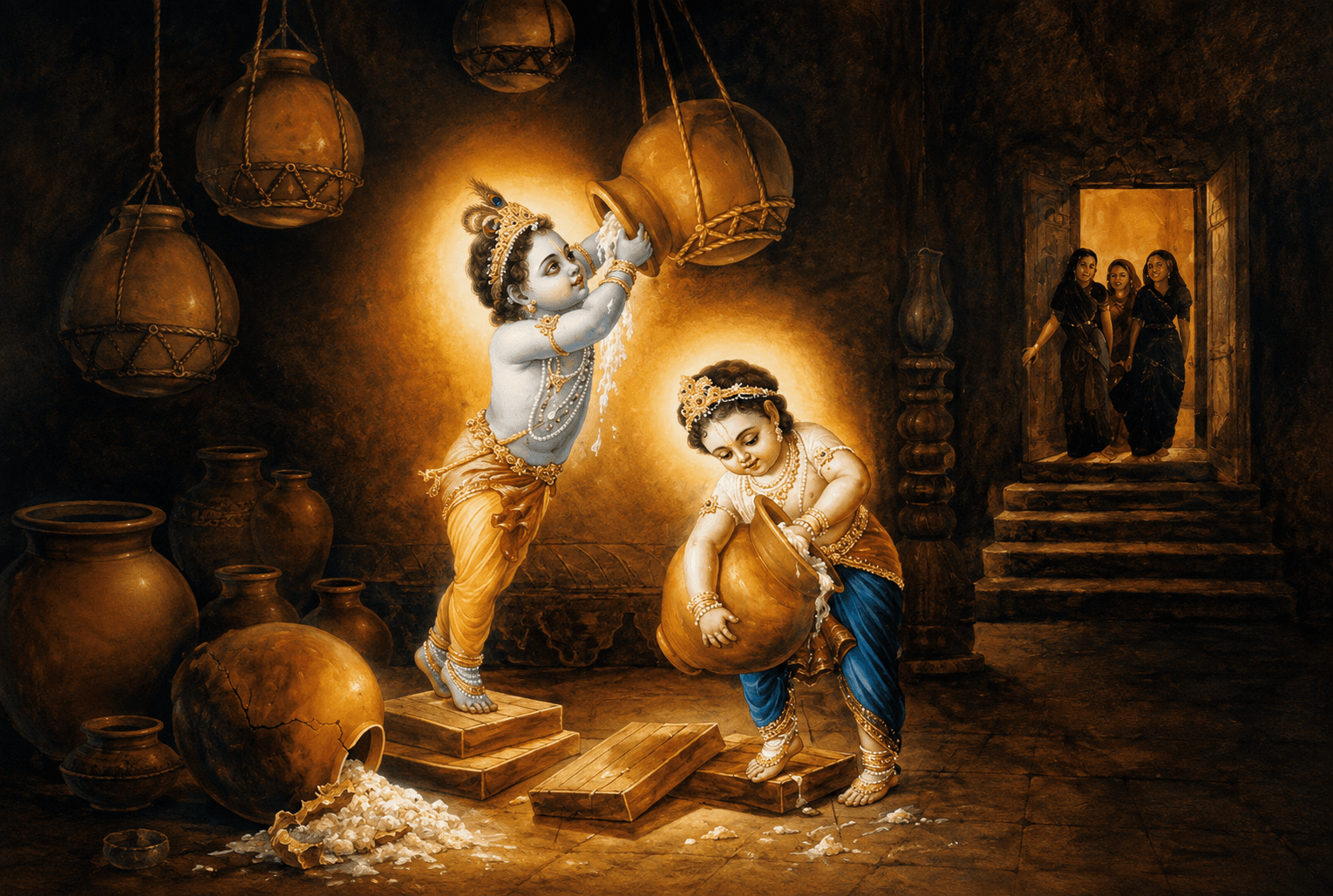
- Makhan mishri, remembering Krishna’s childhood pastimes
- Kheer or sweet rice
- Fresh butter and homemade sweets such as Sandesh or Peda
- Dry fruit laddus
- Sabudana preparations for those observing the fast
- Lemon water or fruit juices after the fast is completed
Before tasting anything, devotees lovingly offer every preparation to Lord Krishna while reciting appropriate prayers or simply praying with gratitude and devotion.
As Srila Prabhupada repeatedly taught, when food is prepared for Krishna with love and offered to Him first, it becomes prasadam, spiritual food that nourishes both the body and the soul.
Janmashtami Puja Samagri List (Checklist)
Preparing the altar with care is an important part of welcoming Lord Krishna on His appearance day. However, devotees should remember that Krishna is won over by devotion rather than the grandeur of the offerings. Even simple items offered with love become significant in his presence.
If you are planning to perform the Janmashtami puja vidhi at home, keeping the necessary items ready beforehand allows you to focus fully on worship during the auspicious Janmashtami puja time.
Essential Items List
For a traditional Janmashtami celebration, you may arrange the following:
- A Deity of Laddu Gopal, Sri Sri Radha Krishna, or a framed picture of Lord Krishna
- A clean altar cloth (Pitambar is usually preferred)
- Fresh flowers and flower garlands
- Tulsi leaves (highly recommended in Vaishnava worship)
- Ghee lamp or oil lamp
- Cotton wicks
- Incense sticks
- Camphor for arati
- Bell
- Conch shell, if available
- Pure water
- Panchamrit ingredients - milk, yoghurt, honey, ghee, and sugar
- Chandan (sandalwood paste)
- Kumkum and turmeric
- Fresh fruits
- Homemade sweets
- Makhan (white butter) and mishri
- Dry fruits
- Seasonal sattvic preparations
- Clean clothes and ornaments for the Deity, if applicable
This Janmashtami puja samagri list is intended as a guide. If every item is not available, there is no need to worry. Lord Krishna accepts offerings made with devotion and sincerity.
A Celebration of Loving Devotion
Janmashtami is not simply about observing rituals or waiting for midnight. It is about remembering the Lord’s appearance with gratitude and joy.
His Divine Grace A.C. Bhaktivedanta Swami Srila Prabhupada repeatedly taught that hearing and chanting about Krishna are the most effective spiritual practices in the present age. Therefore, alongside the Janmashtami puja vidhi, devotees are encouraged to spend as much time as possible in kirtan, japa, scriptural study, and devotional service.
Whether one celebrates in a grand ISKCON temple filled with thousands of devotees or quietly at home with family, the purpose remains the same: to offer one’s heart to Krishna with love.
Frequently Asked Questions
1. Is it compulsory to stay awake till midnight for the puja?
Traditionally, devotees remain awake until midnight because Lord Krishna appeared at this sacred hour. ISKCON temples celebrate it with kirtan, abhishek, arati, and joyful chanting during the Janmashtami puja time.
However, if someone is unable to remain awake due to age, health or circumstances, they should not feel discouraged. Krishna values sincere devotion above external perfection. Devotees may worship according to their circumstances while keeping their minds fixed on the Lord.
2. Can Janmashtami puja be done without an idol of Krishna?
Yes. A Deity is ideal for worship, but it is not the only way to celebrate Krishna Janmashtami.
If you do not have a Deity at home, you may worship a framed picture of Lord Krishna or Sri Sri Radha Krishna with flowers, incense, a lamp, devotional prayers, and offerings of fruits or sweets. The essence of devotion lies in the sincerity of one’s heart rather than external arrangements.
Conclusion
The celebration of Krishna Janmashtami 2026 is far more than commemorating a historical event. It is an invitation to remember the Supreme Lord with gratitude, strengthen our devotional practices, and renew our commitment to living a life centred on Krishna consciousness.
Whether you observe a complete fast, perform the Janmashtami puja vidhi with your family, visit an ISKCON temple, or simply spend the day chanting the Hare Krishna Mahamantra and reading Bhagavad Gita As It Is, every sincere act of devotion brings us closer to Lord Krishna.
It doesn’t matter if you are visiting the temple to celebrate with other devotees or staying at home and doing the Janmashtami puja vidhi at your home. As long as you are doing it with the right intentions, love and true devotion, the Lord is bound to accept it.
Hare Krishna!