Sharad Navratri 2026 begins on Sunday, 11 October, and the first day is dedicated to Maa Shailaputri. She is the first of the Navadurga, the nine forms of the Goddess worshipped over the nine nights. Day 1 is also the day of Ghatasthapana (Kalash Sthapana), when families set up the sacred pot that stays on the altar for the whole festival.
In this article, you will find who Maa Shailaputri is, the story behind her form, a simple puja vidhi you can follow at home, her mantra with meaning, bhoga offered to Goddess Shailaputri, and what her worship can teach a devotee today.
Who is Maa Shailaputri?
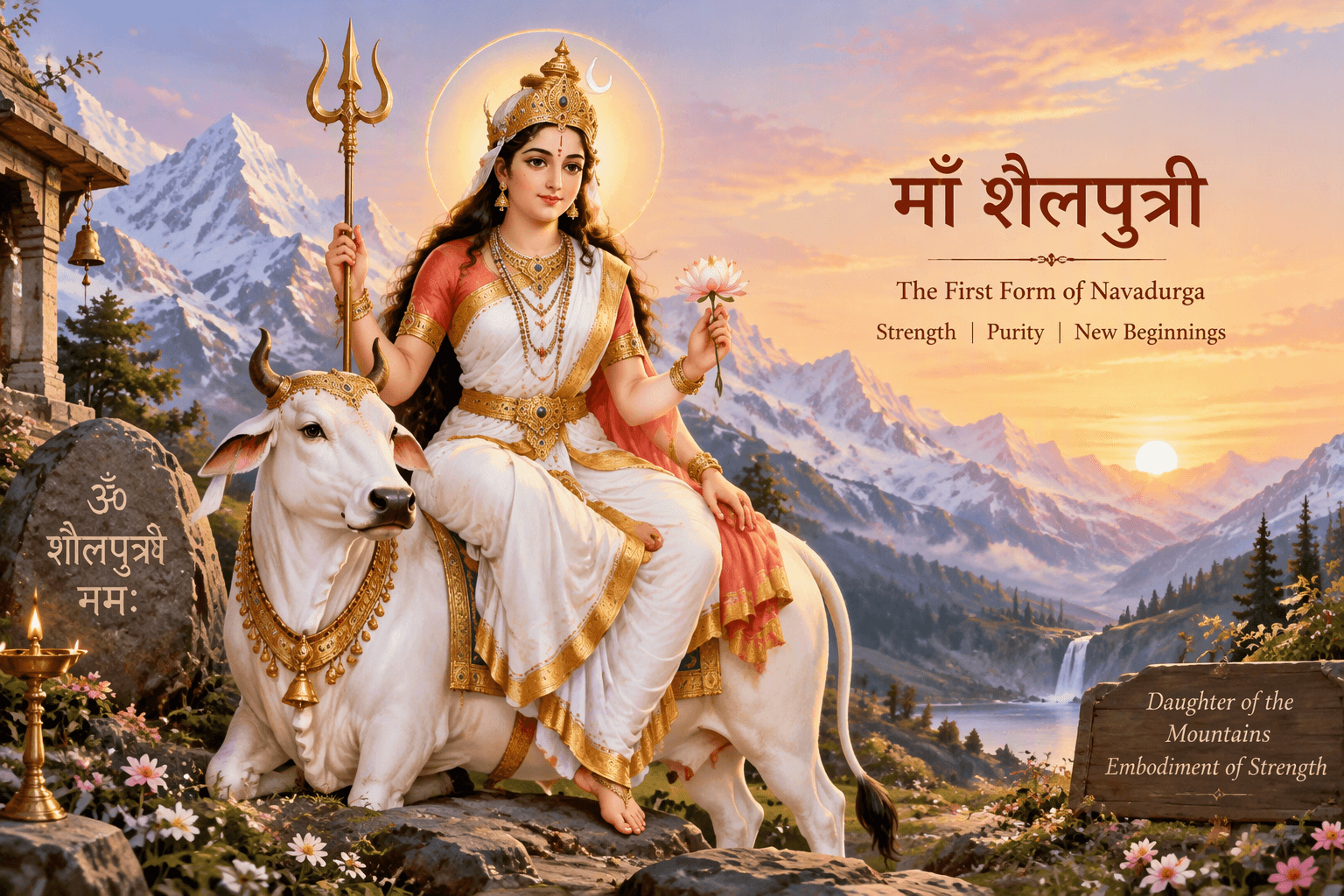
The name comes from two Sanskrit words: shaila, meaning mountain, and putri, meaning daughter. Maa Shailaputri is the daughter of Himavan, king of the Himalayas. She is also known as Parvati and Hemavati.
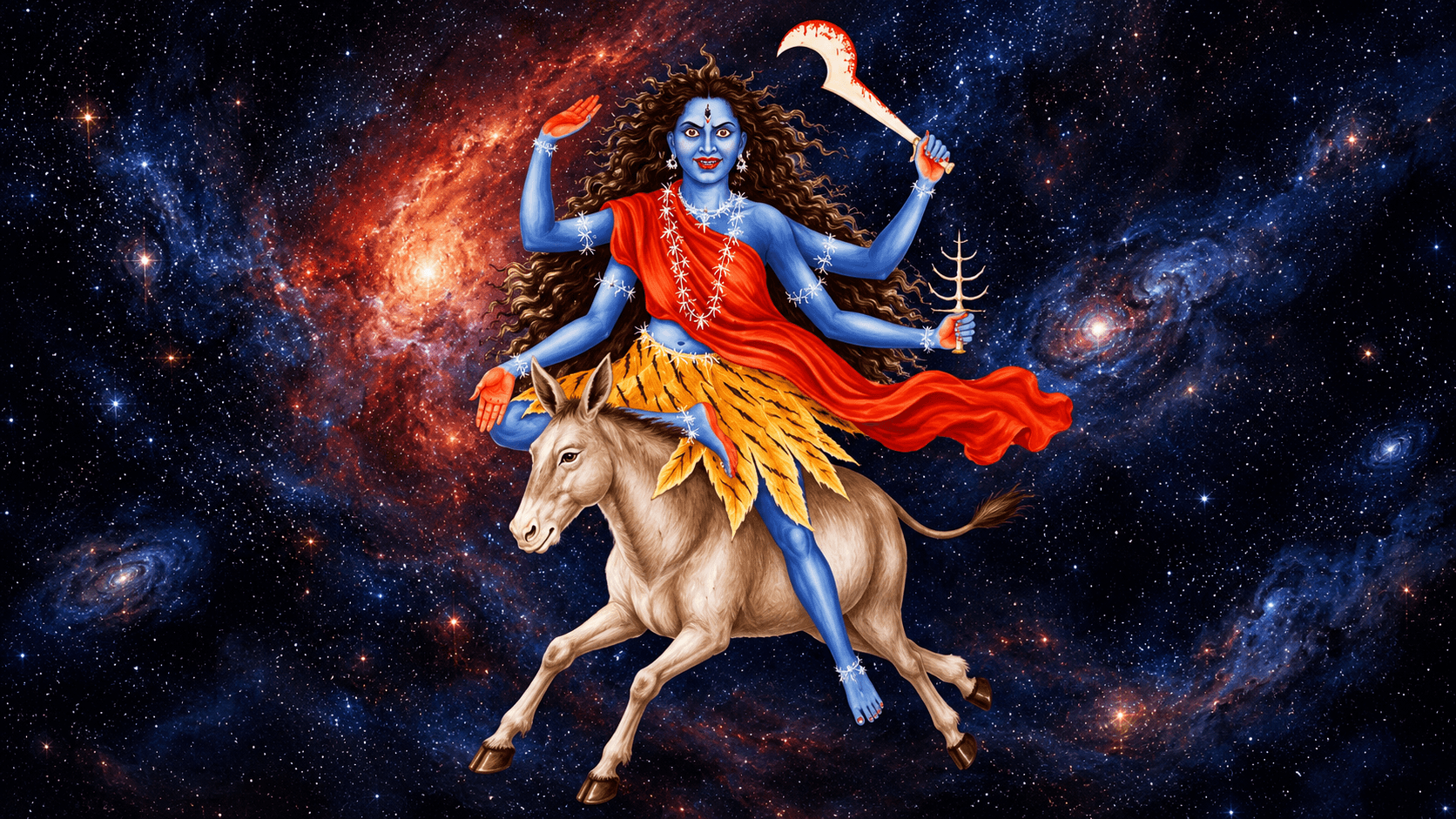
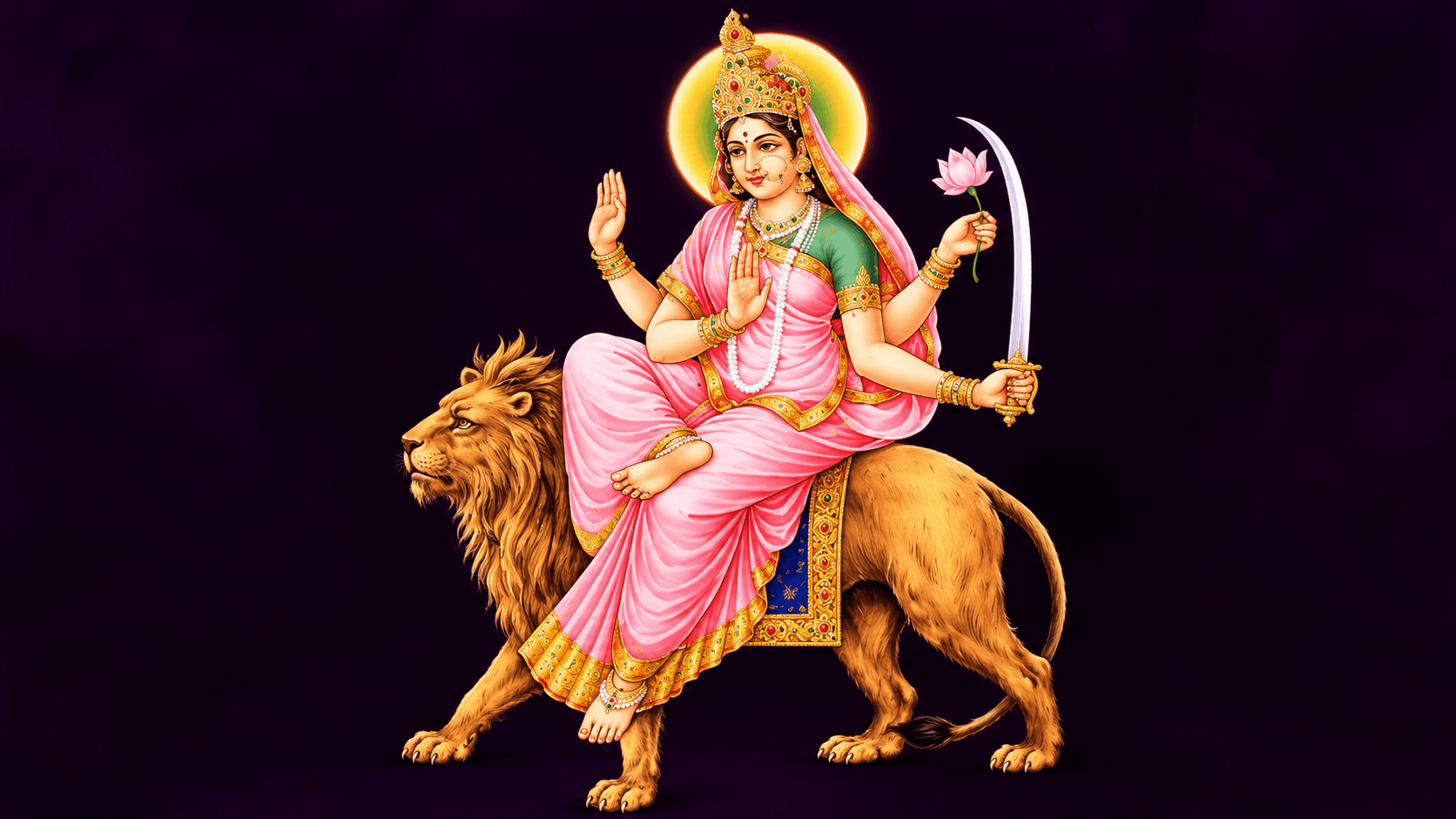
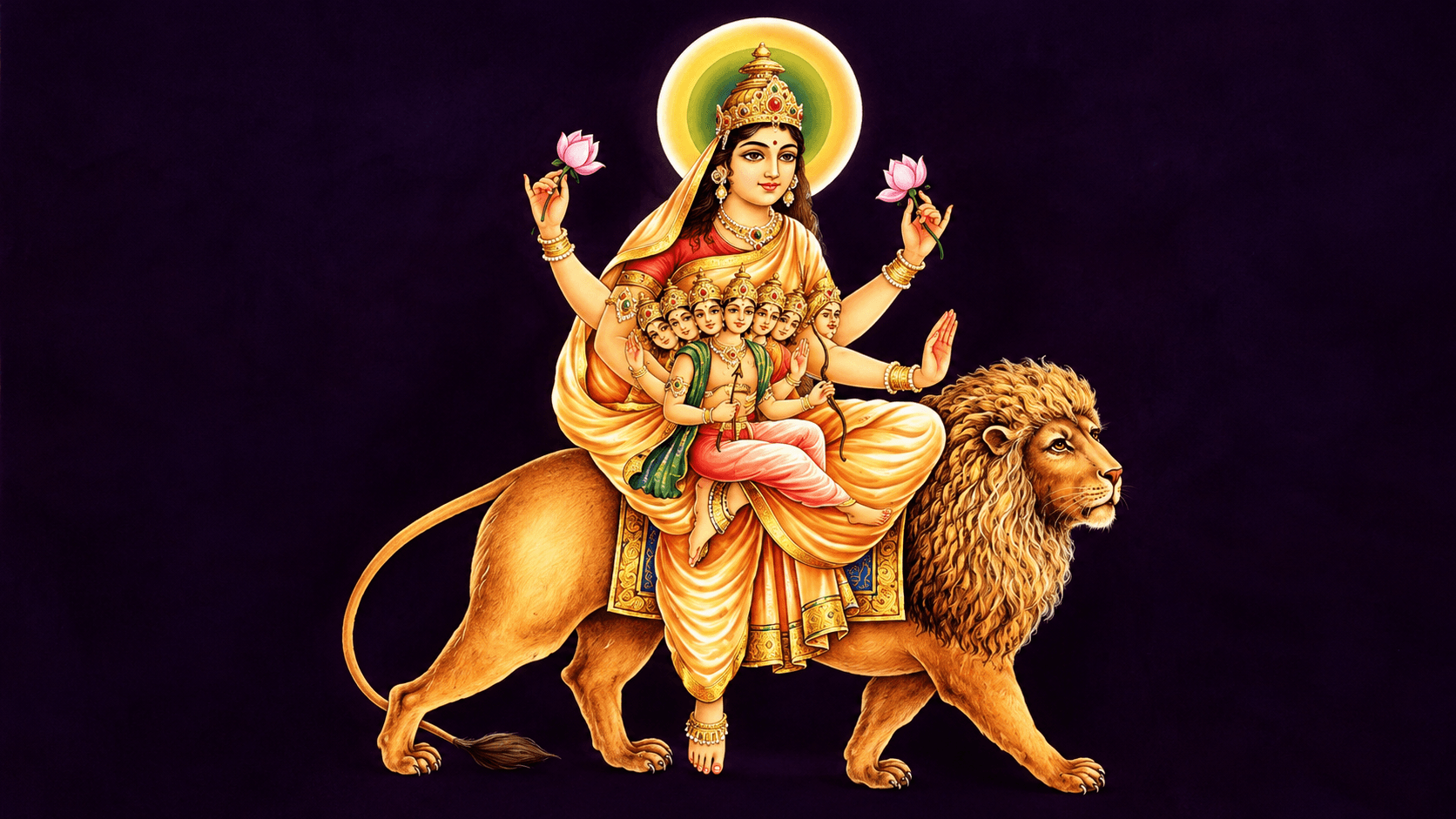
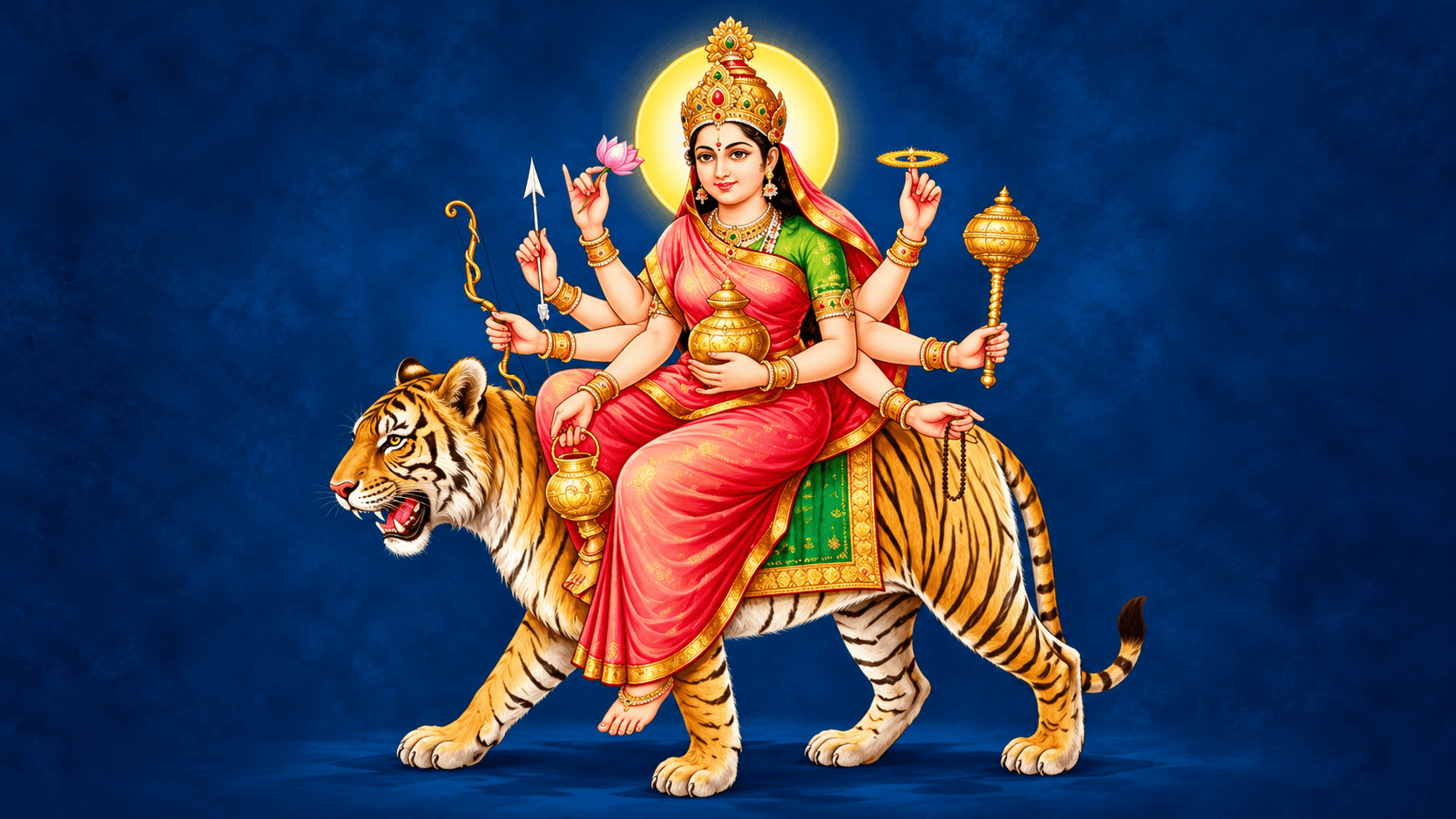
The nine days of Navratri puja begin with Shailaputri. With each day, another form of the Goddess is worshipped, reflecting different moments and aspects associated with her divine story, from penance and marriage to motherhood, battle and, finally, perfection.
The Story of Maa Shailaputri
In her previous birth, she was Sati, the daughter of Daksha Prajapati and the wife of Lord Shiva. Daksha organised a great yajna and deliberately did not invite Shiva. Sati went anyway, but when her father insulted her husband before the assembled devas, she gave up her body in the sacrificial fire.
She was born again as the daughter of Himavan and his queen Mena. In this birth, she once again set her heart on Lord Shiva and was later united with him. As she was born to the mountain king, she is worshipped as Shailaputri.
Symbolism and Iconography
Every devi and devata is represented with certain symbols and icons:
-
Vehicle: She rides Nandi, a white bull, which is why she is also called Vrisharudha.
-
Right hand: A trident (trishul).
-
Left hand: A lotus flower.
-
Forehead: A crescent moon.
Day 1 of Navratri is seen as a time to establish inner stability and prepare oneself spiritually for the days ahead. The idea of a “firm foundation” connects the qualities of the mountain with the beginning of the nine-day worship.
Maa Shailaputri Puja Vidhi at Home
Here is a step-by-step approach to performing Maa Shailaputri puja at home:
-
Wake up early, bathe and wear clean clothes.
-
Clean the altar and sprinkle Gangajal or clean water.
-
Perform Ghatasthapana in the morning muhurat: place a kalash filled with water on a bed of soil sown with barley, and top it with mango leaves and a coconut.
-
Place a picture of Maa Shailaputri or Maa Durga on a red cloth beside the kalash.
-
Light a ghee lamp and incense and offer flowers, kumkum and akshat (unbroken rice).
-
Chant her dhyana mantra and the stuti.
-
Offer the bhoga, then perform aarti.
-
Pray for steady faith and share the prasad with family.
Note: Check the exact Ghatasthapana muhurat for your city in a local panchang, since timings vary by location.
Maa Shailaputri Mantra
Dhyana mantra
वन्दे वाञ्छितलाभाय चन्द्रार्धकृतशेखराम्।
वृषारूढां शूलधरां शैलपुत्रीं यशस्विनीम्॥
Vande vanchhita-labhaya chandrardha-krita-shekharam, vrisharudham shuladharam shailaputrim yashasvinim.
Meaning: I bow to the glorious Shailaputri, who wears the half-moon on her head, rides a bull and holds a trident, so that my wishes may be fulfilled.
Stuti
या देवी सर्वभूतेषु माँ शैलपुत्री रूपेण संस्थिता।
नमस्तस्यै नमस्तस्यै नमस्तस्यै नमो नमः॥
Simple mantra: ॐ देवी शैलपुत्र्यै नमः (Om Devi Shailaputryai Namah)
Bhoga and Colour for Day 1
Every day of the nine days of Navratri is associated with a special bhoga and a certain colour. For day 1, the bhoga and colour are:
Bhog: Pure desi ghee, or sweets made with ghee, is the traditional offering to Maa Shailaputri. Keep all bhoga sattvic: vegetarian and free of onion and garlic.
Colour: In the weekday-based tradition followed in Maharashtra, Day 1 in 2026 falls on a Sunday, and the colour is orange. Other regions follow different colour lists, so follow your family or local custom.
A Devotional Reflection: The Mother as the Lord's Energy
The Brahma-samhita (5.44) describes Durga Devi as the energy who creates, maintains and dissolves the material world, acting like the Lord's shadow and moving according to His will:
सृष्टिस्थितिप्रलयसाधनशक्तिरेका छायेव यस्य भुवनानि बिभर्ति दुर्गा।
इच्छानुरूपमपि यस्य च चेष्टते सा गोविन्दमादिपुरुषं तमहं भजामि॥
From this perspective, honouring the Goddess during Navratri is also a way of honouring the Supreme Lord whom she serves. Maa Shailaputri’s story carries a simple lesson: across two births, her heart remained fixed on the same goal. A devotee begins Navratri by seeking that same steadiness of faith, so devotion remains firm through changing circumstances.
Maa Shailaputri begins the nine days of Navratri as the daughter of the Himalayas. As you set up your kalash, offer ghee bhoga and chant her mantra, you can ask for the same steady faith, so that your devotion stays firm in every circumstance. Then choose one practice for these nine days, such as daily chanting, reading a few verses of the Gita or offering prasadam and keep to it until Navami.
May Maa Shailaputri bless you and your family with strength, faith and devotion this Navratri. To keep your devotion going throughout the festival, join the community at ISKCON Bhiwandi, where you can take part in kirtans, festivals and seva throughout the year.
FAQs
When is Navratri Day 1 in 2026?
Navratri Day 1, the day of Maa Shailaputri and Ghatasthapana, falls on Sunday, 11 October 2026.
Why is Maa Shailaputri worshipped first?
Maa Shailaputri is the first form of the Navadurga and represents the Goddess as the daughter of the Himalayas, the starting point of the nine-day worship.
What bhoga should I offer Maa Shailaputri?
Pure desi ghee or ghee-based sweets are the traditional offering on Day 1.
What does Maa Shailaputri hold in her hands?
Maa Shailaputri holds a trident in her right hand and a lotus in her left. She rides the bull Nandi.