Just two days after the joyous celebrations of Vijayadashami, the sacred occasion of Pashankusha (Papankusha) Ekadashi arrives, offering devotees a time to reconnect with Lord Vishnu. Observed with fasting, prayer and devotion, this Ekadashi holds deep spiritual significance for those seeking the Lord’s blessings.
For devotees, the day is not simply about observing a fast. It is an opportunity to spend more time in prayer, remember Lord Vishnu and bring greater devotion into everyday life. This blog covers the Pashankusha Ekadashi date, parana time, vrat katha and puja vidhi for your clarity.
What is Pashankusha (Papankusha) Ekadashi?
Pashankusha Ekadashi falls on the eleventh day of the Shukla Paksha, or bright fortnight, in the sacred month of Ashwin (September–October). The name combines papa, meaning sin, and ankusha, the goad used to guide an elephant. Just as a goad gently brings a powerful elephant under control, sincere observance of this Ekadashi helps devotees discipline the restless mind and senses and move closer to the Lord.
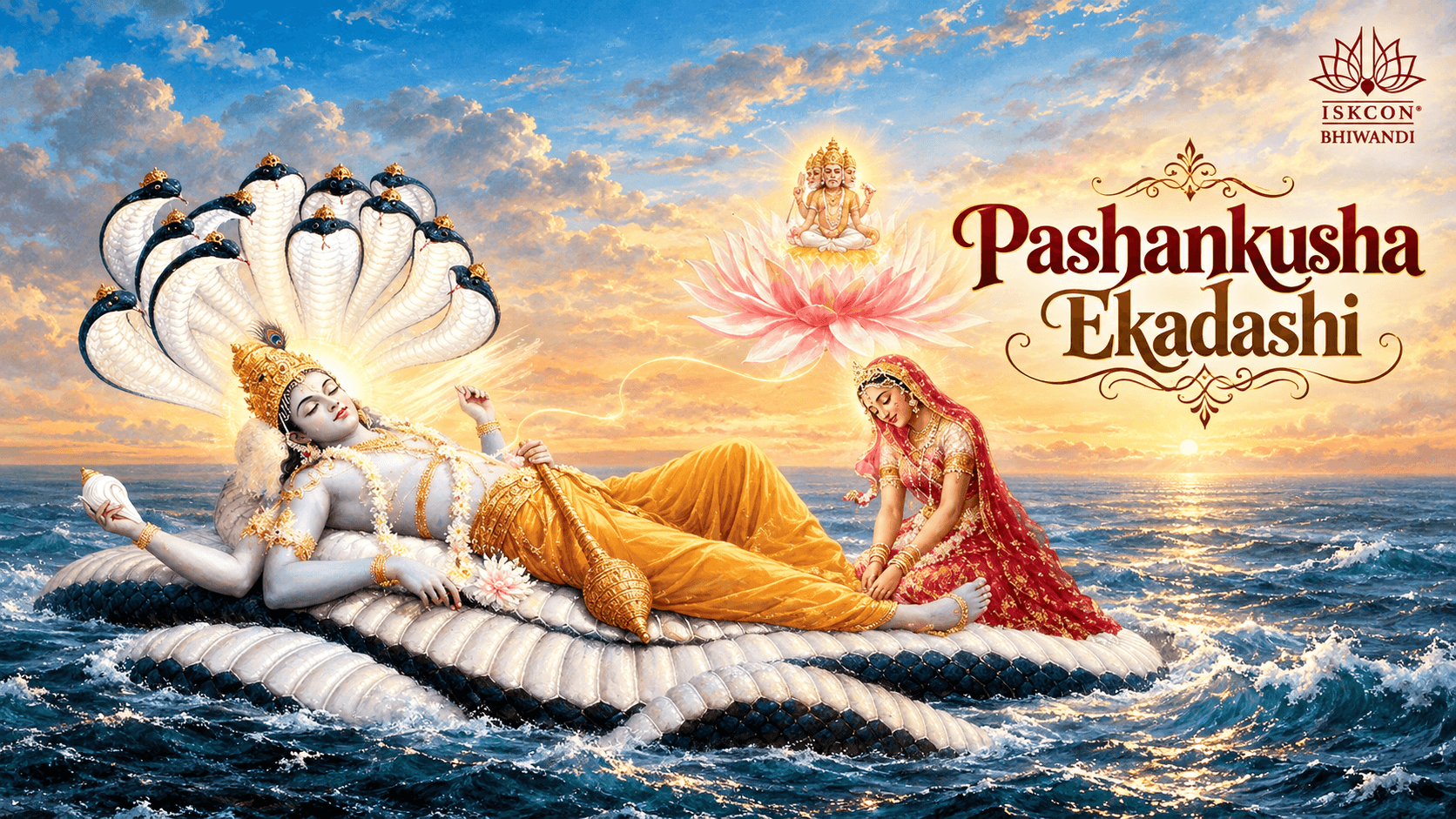
On this auspicious day, devotees lovingly worship Lord Padmanabha, the form of Vishnu from whose navel the divine lotus emerges. For followers of the Gaudiya Vaishnava tradition and Krishna consciousness movement, this vrata is a cherished opportunity to remember Krishna, seek His mercy and deepen their devotion.
Papankusha Ekadashi 2026 Date & Parana Time
Papankusha Ekadashi falls on Thursday, 22 October 2026. The fast is broken (parana) on Friday, 23 October 2026, between approximately 06:35 AM and 08:50 AM IST in the Bhiwandi region, before Dwadashi Tithi ends. Timings are approximate and depend on local sunrise, so devotees outside India should check the parana time for their own city.
Papankusha Ekadashi Vrat Katha
Here is the Papankusha Ekadashi Vrat Katha. Let us get started:
Krishna and Yudhishthira's Dialogue
Maharaj Yudhishthira asked Lord Krishna about the Ekadashi of Ashwin's bright fortnight. The Lord replied that it is called Papankusha Ekadashi, and that worshipping Lord Padmanabha on this day brings joy in this world and liberation in the next.
Even a simple obeisance to Lord Vishnu on this day is said to give the merit of severe austerities. The scriptures also record that Sage Narada and Lord Brahma discussed its great significance.
The Story of Krodhana the Hunter
Krodhana, whose name means "anger," lived in the Vindhya region and spent his life in violence and deceit. As death approached, he was gripped by fear of Yamaraja's messengers and the punishment awaiting him. Trembling, he ran to the ashram of the compassionate Sage Angira and surrendered at his feet.
Seeing his sincere repentance, the sage instructed him to observe Papankusha Ekadashi and worship Lord Padmanabha. Krodhana followed the instructions faithfully, and by the Lord's mercy the sins of a lifetime were cleansed. When his time came, the Yamadutas could not touch him, and he returned to the shelter of Lord Vishnu.
The lesson: No one is ever too fallen to receive the Lord’s mercy. When we sincerely turn to Him with a humble heart, He lovingly accepts our surrender and gives us the strength to find our way back to Him.
The Glories of Papankusha Ekadashi
Papankusha or Pashankusha Ekadashi holds deep spiritual significance. Let us explore it in detail:
-
Washes away sins: The Ekadashi brings material prosperity and supports spiritual progress.
-
Bestows great merit: Papankusha Ekadashi brings the merit of numerous fire sacrifices and pilgrimages.
-
Protects from Yamaraja: Chanting the Lord’s holy names helps the soul attain Vishnuloka and protects from Yamaraja.
-
Uplifts ancestors: Sincere observance on this Ekadashi is believed to help ancestors attain Vaikuntha.
-
Multiplied charity: Even a small, sincere donation purifies the heart and invites Lord Vishnu’s mercy.
Papankusha Ekadashi Puja Vidhi: How to Observe the Vrata
The Papankusha Ekadashi Puja is observed in the following manner:
Fasting Rules
If you want to observe a fast on the Papankusha Ekadashi, follow the following fasting rules:
-
Take a light meal on Dashami by avoiding grains and beans.
-
On Ekadashi, abstain from grains and pulses. Those who are able may fast on fruits, milk or water; choose what suits your health.
-
Avoid onion, garlic and non-vegetarian food and keep the mind free from anger and idle talk.
-
Chant extra rounds of the Hare Krishna maha-mantra and hear Krishna-katha.
Archana to Lord Padmanabha with Tulasi
You can offer your prayers to Lord Padmanabha with Tulasi in the following way:
-
Wake early, bathe and clean the altar.
-
Offer incense, a ghee lamp, flowers and water.
-
Offer Tulasi leaves, collected a day earlier. Avoid plucking Tulasi leaves on Ekadashi.
-
Chant Vishnu mantras or the holy names, and hear the katha.
-
Perform aarti and offer obeisances.
You can offer a puja online or see the Lord's daily darshan.
How to Break the Fast
On Friday, 23 October, bathe, offer a simple meal to the Lord, and break the fast with grains within the parana window. If possible, feed a needy person first.
Charity & Annadaan on Pashankusha Ekadashi
Charity is an important part of Pashankusha Ekadashi, and Annadaan, the offering of food, is a beautiful way to serve others. Through Food for Life, your contribution helps provide sanctified prasadam to those in need, turning a simple offering into an act of loving seva.
Offer Annadaan: Make an offering on Pashankusha Ekadashi.
Support a meal: Contribute to Food for Life.
Serve through seva: Volunteer your time and help spread the spirit of compassion.
Pashankusha Ekadashi at ISKCON Bhiwandi
Join us at Sri Sri Radha Madhava Mandir, Hare Krishna Hill, Mansarovar, Bhiwandi, and observe the vrata in the loving association of devotees through kirtan, prayer and remembrance of the Lord. You can also learn more about our mission, explore spiritual courses, and discover upcoming festivals and devotional blogs on the ISKCON Bhiwandi website.
Contact: +91 91752 63178 | support@iskconbhiwandi.org
FAQs
Why is it called Pashankusha Ekadashi?
It combines papa (sin) and ankusha (elephant goad). Just as a goad controls an elephant, this Ekadashi helps control the mind and senses and frees one from sinful reactions.
Can children, elderly or sick devotees observe this Ekadashi?
Yes, according to their ability. They may avoid grains and beans, have fruits or milk, and engage in chanting and hearing. Anyone with a medical condition should consult a doctor before fasting. Ekadashi is about sincere devotion and remembrance of the Lord and not unnecessary hardship.
Should I stay awake at night on Pashankusha Ekadashi?
Staying awake in kirtan and hearing about the Lord is praiseworthy, but not compulsory. If you cannot stay up all night, spend as much of the evening as you can in devotional activity.