As the holy month of Kartik deepens and the lamps of Diwali begin to glow, devotees pause to observe one of the most touching Ekadashis of the entire year. Rama Ekadashi carries within it a story of devotion so pure that even death could not diminish it, a tale that continues to bring joy to the hearts of devotees who long to understand true faith.
Understanding Rama Ekadashi's significance through this beautiful story allows devotees to approach the vrat not merely as a fast, but as a heartfelt act of love, much like Chandrabhaga's own devotion that shapes this entire narrative.
What is Rama Ekadashi?
Rama Ekadashi, also known as Rambha Ekadashi, is a sacred fasting day dedicated to Lord Vishnu, observed with special devotion as the Kartik month shifts toward its most joyous festivities. It stands among the most cherished Ekadashis of the year, not only for the spiritual merit it bestows but for the heartfelt story of love and sacrifice that devotees remember each time it arrives.
Meaning of the name and timing in Kartik Krishna Paksha
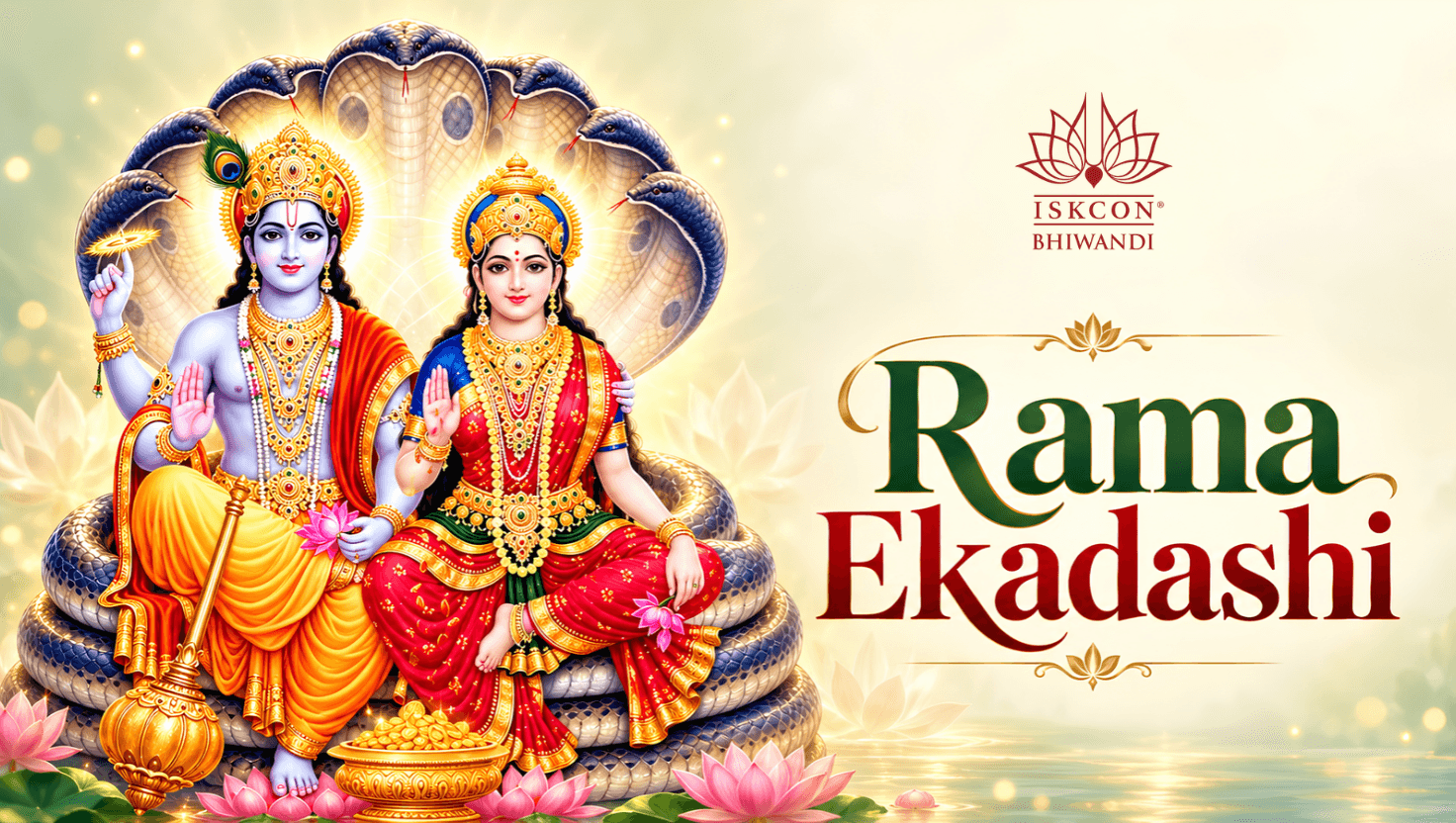
This Ekadashi falls on the eleventh lunar day of the Krishna Paksha, the dark fortnight, in the holy month of Kartik. The name Rama refers not to Lord Ramachandra but to Goddess Lakshmi, whose own name Rama signifies auspiciousness and grace, making this day especially dear to devotees seeking the combined blessings of Sri Vishnu and His eternal consort.
This small clarification often surprises devotees encountering the festival for the first time. Yet, it beautifully underscores the day's deep connection to Lakshmi Narayana worship, particularly fitting as it arrives so close to Diwali, when Goddess Lakshmi is honoured throughout Indian households.
Rama Ekadashi 2026 Date & Muhurat
In 2026, Rama Ekadashi falls on Thursday, 5th November, just four days before the festival of Diwali. Devotees are encouraged to confirm the exact tithi and parana timing for their own city with a local panchang, since these can shift slightly depending on sunrise.
Rama Ekadashi Vrat Katha
Let us look into the Rama Ekadashi vrat katha:
King Muchukunda and His Daughter Chandrabhaga
The story of Rama Ekadashi, as told by Lord Krishna to Yudhishthira, begins with the righteous king Muchukunda, a dear friend of the demigods and a devout follower of Lord Vishnu. He ensured every soul in his kingdom observed Ekadashi with strict discipline. His beloved daughter, Chandrabhaga, herself deeply devoted, was given in marriage to Shobhana, the son of King Chandrasena.
Prince Shobhana's Fast and Passing
One Ekadashi, Shobhana came to visit his father-in-law's palace, and Chandrabhaga grew anxious, knowing her husband's frail health could scarcely endure a complete fast. She warned him that in her father's house, not even the animals were given food or water on this sacred day, and offered him the choice to leave rather than risk his life.
Yet Shobhana, unwilling to leave his wife or dishonour her father's household, chose to observe the vrat regardless of the risk. As the day wore on, hunger overcame him, and by the time Dwadashi dawned, he had passed away, his body unable to bear the austerity, though his devotion never once wavered.
Shobhana's Celestial Kingdom and Chandrabhaga's Sacrifice
Through the merit earned by his fast, Shobhana's soul was granted a radiant kingdom atop Mount Mandarachala, resplendent with jewels and served by celestial attendants. Yet this glory was not permanent, for he had observed the vrat under pressure rather than with complete faith.
When a wandering Brahmin named Somasharma found him there, Shobhana asked him to send a message to Chandrabhaga. Overjoyed to learn her husband lived on, she journeyed to him. She lovingly transferred the full merit of her own lifetime of sincere Ekadashi fasting, making his celestial kingdom permanent at last, a sacrifice born entirely of devoted love.
Significance & Benefits of the Vrat
Rama Ekadashi is considered exceptionally meritorious, with scriptures describing its benefit as equal to performing a hundred Rajasuya or Ashwamedha sacrifices. Beyond its power to dissolve sinful reactions, the story itself carries a tender lesson: that devotion offered even under difficult circumstances is never wasted, and that love, when pure, can accomplish what worldly power cannot. For married devotees especially, this vrat is cherished as a source of blessing, harmony and protection within the household.
Chandrabhaga's willingness to offer up the merit of her own lifetime of fasting, asking nothing in return except her husband's happiness, is often held up as one of the most beautiful examples of selfless love found within Vaishnava literature. Her devotion reminds every devotee that spiritual merit, when offered freely out of love, carries a power far greater than when it is kept solely for one's own benefit.
Fasting Rules & Puja Vidhi
The fasting rules and puja vidhi are mentioned below for your reference:
Preparations before the fast
Devotees begin their observance with an early bath and a sincere prayer dedicating the day to Lord Vishnu and Goddess Lakshmi. Grains, beans and certain vegetables are avoided throughout the day, with many choosing a complete fast while others take simple sattvic food according to their health and capacity. The day is spent in kirtan, remembrance of Chandrabhaga's devotion.
Breaking the fast on Dwadashi
The fast is broken the following morning during the parana window, ideally after first offering food to a Brahmana or someone in need. Devotees traditionally avoid breaking their fast before sunrise or after the Dwadashi tithi has concluded, ensuring the vrat is completed with full observance of its proper timing. This small but meaningful detail reflects the same discipline Shobhana himself displayed.
Celebrating Rama Ekadashi at ISKCON Bhiwandi
At ISKCON Bhiwandi, devotees gather to observe Rama Ekadashi with kirtan, hearing this beautiful vrat katha, and collective fasting before Sri Sri Radha Madhava, as the temple prepares for the joyous arrival of Kartik's festive season.
You are warmly invited to explore our The Holy Month of Kartik 2026 – Significance, Rituals & Damodara Vrata | ISKCON Bhiwandi guide and our ISKCON Bhiwandi blogs page for further devotional reading during this sacred season.
FAQs
Is Rama Ekadashi connected to Lord Rama himself?
No, despite the similarity in name, Rama Ekadashi is not directly connected to Lord Ramachandra. The name Rama here refers to Goddess Lakshmi, whose own name Rama signifies grace and auspiciousness, making the day especially dedicated to the combined worship of Lord Vishnu and His eternal consort.
What is Parana, and when should the fast be broken?
Parana refers to the ritual breaking of the Ekadashi fast, traditionally performed the following morning on Dwadashi, within a specific auspicious window after sunrise. Breaking the fast within this correct timing, rather than too early or too late, is considered essential to receiving the full spiritual benefit of the vrat.
How is Rama Ekadashi different from other Ekadashis in the Kartik month?
While Kartik contains other significant Ekadashis such as Utpanna and Prabodhini, Rama Ekadashi holds a unique place as the one observed just before Diwali, carrying its own distinct vrat katha centred on Chandrabhaga's devotion. Its story of sacrificial love, rather than the defeat of a demon or the Lord's own pastime, gives this Ekadashi a particularly tender and personal character among the Kartik observances.