Of all the months held sacred in the Vaishnava calendar, none is more tenderly cherished than the month of Kartik. It is a month wrapped in the warmth of a mother's love, the flicker of countless ghee lamps, and the sweet remembrance of Krishna's most endearing childhood pastime. As devotees around the world prepare their hearts for this beautiful season, ISKCON Bhiwandi warmly invites you to discover why this single month is considered so extraordinarily dear to the Lord.
What is the Holy Month of Kartik?
Kartik is the eighth month of the Hindu lunar calendar and is universally regarded as the most sacred and spiritually potent month of the entire year. Within the Vaishnava tradition, this month is affectionately known as Damodara Maas, named after one of Krishna's most beloved childhood names, Damodara, meaning He whose belly was bound by a rope. Throughout this month, devotees in the entire world observe a simple yet deeply moving vow, the Kartik Vrata, dedicating each evening to offering a lamp before the Lord.
The entire month is considered highly auspicious, and even small acts of devotion are believed to bring great spiritual benefits. This makes the season special for both householders and devoted followers.
For many families, Kartik also carries a gentle, homely warmth. The joyful lights of Diwali fall right in the middle of this sacred month, roughly midway between Sharad Purnima, when the Kartik Vrata begins, and Kartik Purnima, when it draws to a close.
Far from being a separate celebration, Diwali becomes one radiant night within this much longer season of devotion, and the lamps lit for the festival flow naturally into the nightly Deep Daan that continues both before and after it. It is, in many ways, a month that teaches an entire family how to keep the light of devotion burning steadily, from the first lamp of Kartik through Diwali and onward to Kartik Purnima itself.
Kartik Month 2026 Start & End Date
In 2026, the Vaishnava observance of Kartik Vrata, or Damodara Maas, begins the day after Sharad Purnima, on Monday, 26th October, and concludes on Kartik Purnima, Tuesday, 24th November.
This closing day, Kartik Purnima, is celebrated with special joy across Vaishnava temples as it marks the completion of a full month of devoted lamp offerings and remembrance of the Lord.
Devotees are encouraged to check their local temple calendar for exact regional timings, since the Kartik snana, the daily holy bath observed throughout the month, is also tied closely to these same sacred dates.
Kartik Month Significance in the Vaishnava Calendar
The Skanda Purana praises Kartik as the most sacred of all months and especially beloved by Lord Krishna. It is said that whatever devotional service is offered during this month, whether a lamp, a prayer or an act of charity, carries a spiritual weight far greater than the very same act performed at any other time. This is why Kartik is often described as a month of multiplied mercy, a season in which the Lord's compassion flows most freely toward his sincere devotees.
For the Vaishnava community, Kartik is also a time of deep personal reflection, a gentle invitation to renew one's commitment to chanting, to temple visits and to acts of service, carrying that renewed enthusiasm forward into the months ahead.
Srimati Radharani is considered the presiding deity of this sacred month, and devotees often find that their remembrance of Kartik naturally deepens their love for Radharani as well as for Krishna. This dual presence of Radha and Krishna within the spirit of Kartik is part of what makes the month feel so tender and complete, a time when the sweetness of devotional love is felt in every small ritual performed.
Why is Kartik Called Damodara Month?
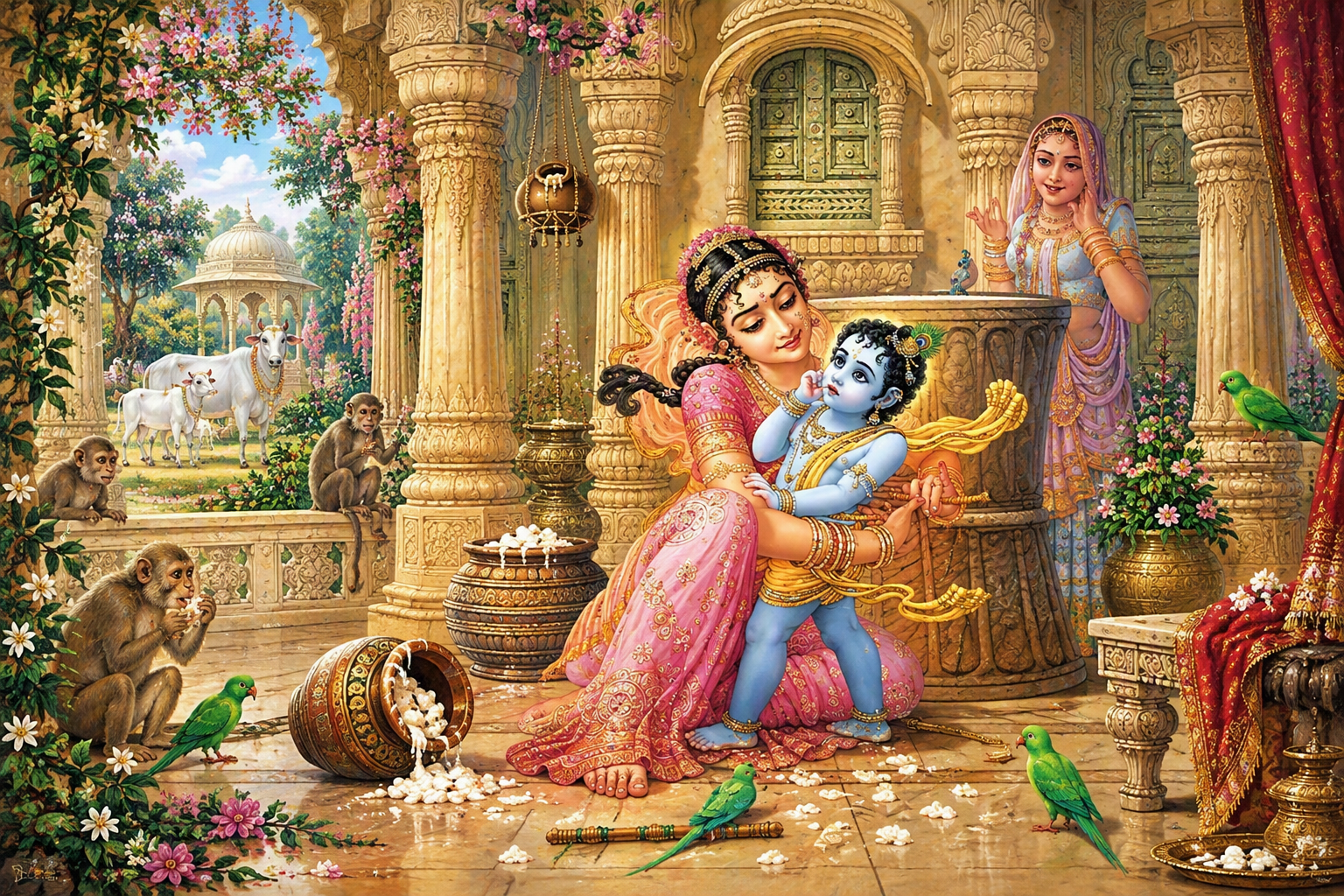
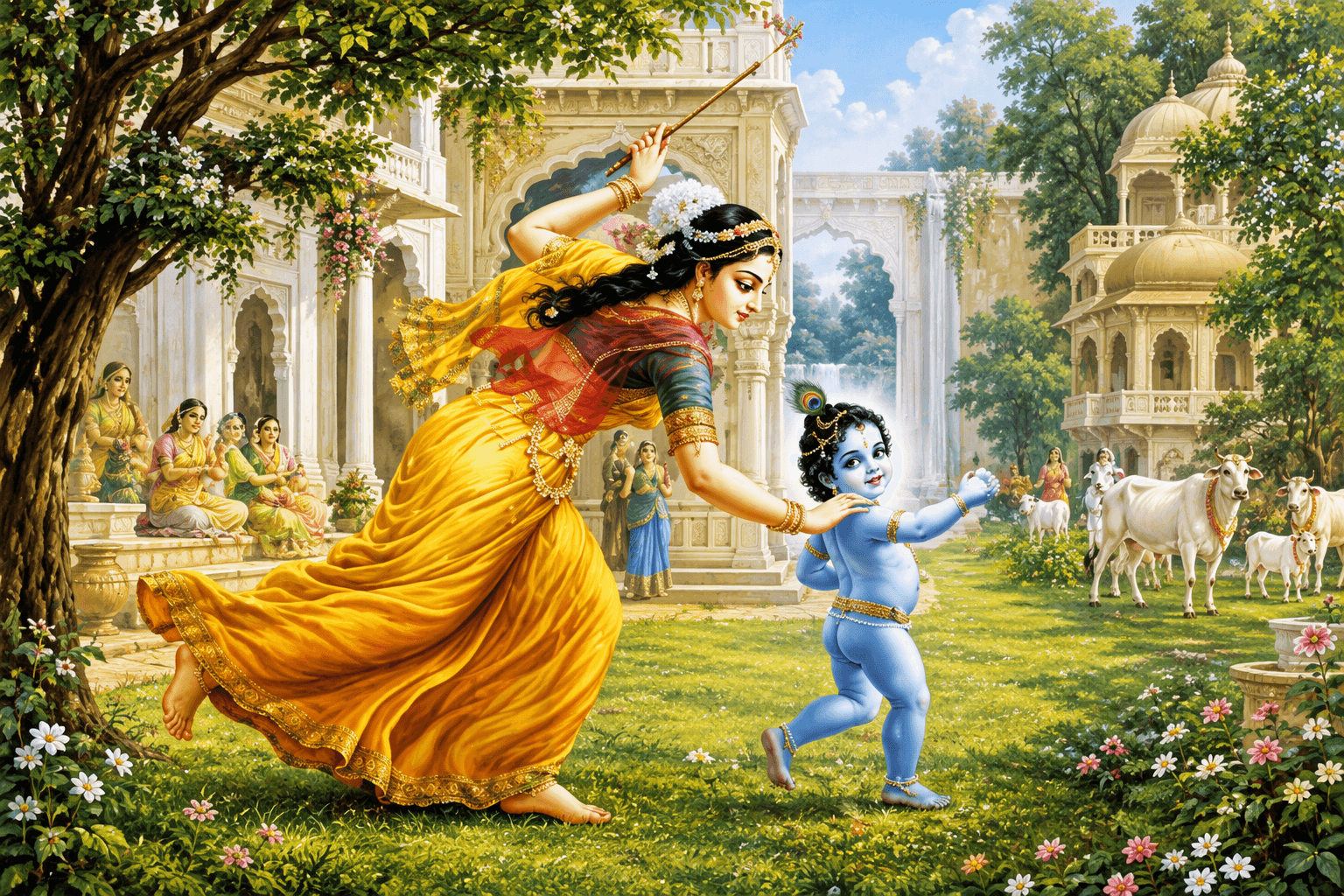
The name Damodara comes from one of the most touching pastimes in Krishna's childhood. As a young boy in Vrindavan, Krishna was caught stealing butter by his mother, Yashoda, who lovingly disciplined him by tying a rope around his belly. However many ropes she joined together, they always fell two fingers short, until Krishna, touched entirely by the purity of her maternal love, allowed himself to be bound by the ropes.
This pastime beautifully illustrates a profound spiritual truth cherished throughout the Vaishnava tradition: that the Supreme Lord, who cannot be bound or conquered by anything in creation, willingly submits Himself to the simple, selfless love of His devotee. It is this very story that devotees remember each evening throughout Kartik while singing the Damodarashtakam, the tender eight-verse prayer composed in glorification of this pastime.
Kartik Maas Rituals (Deep Daan, Fasting, Tulsi Worship)
The signature ritual of Kartik is Deep Daan, the offering of a lit ghee lamp before the deity of Damodara each evening, accompanied by the heartfelt recitation of the Damodarashtakam. This simple act, requiring nothing more than a wick, a little ghee and sincere devotion, is considered to be one of the most powerful offerings a devotee can make throughout the entire year.
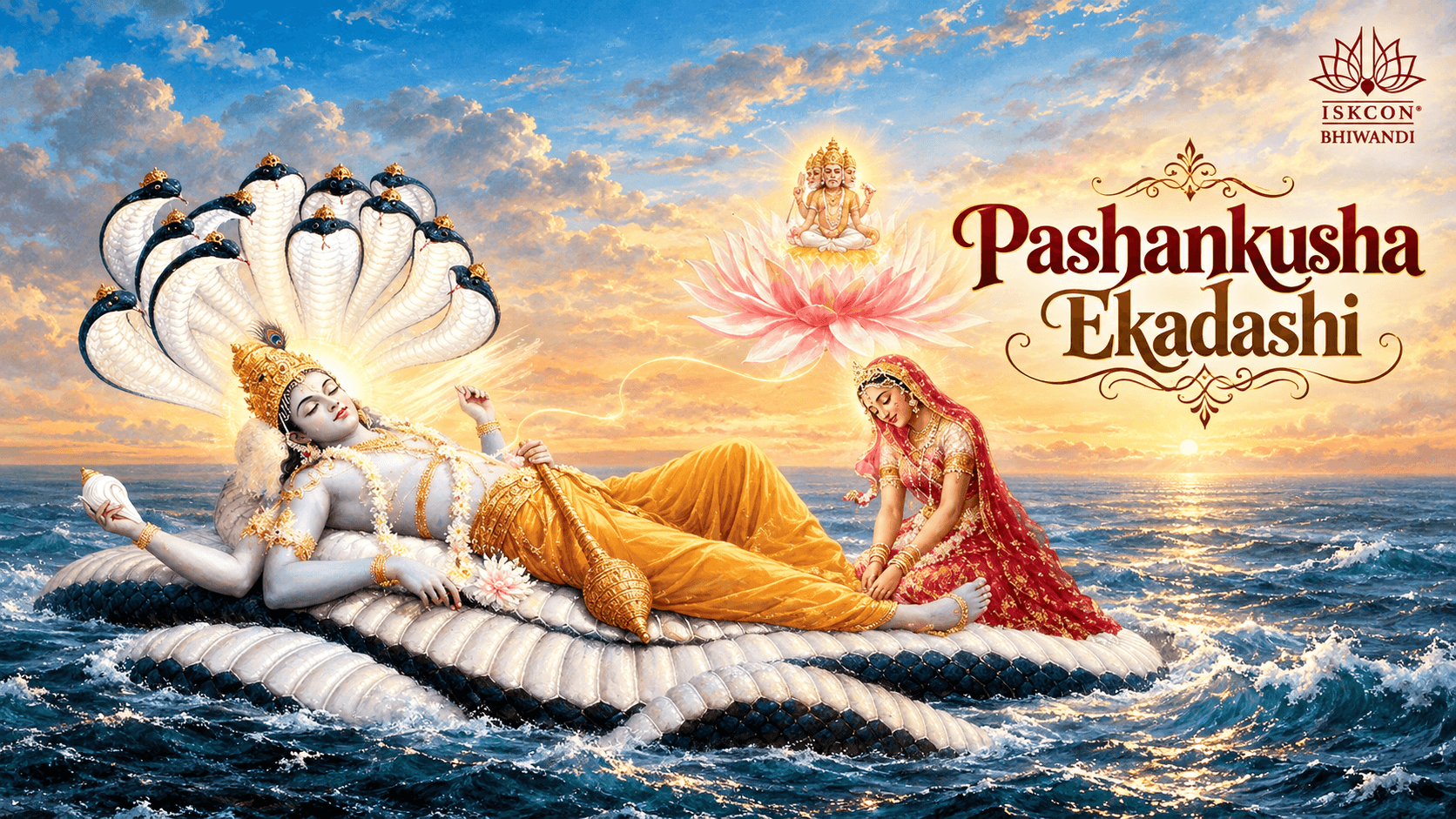
Tulsi worship also takes on special significance during this month, with many devotees offering water, lamps and prayers to Srimati Tulsi Devi each morning and evening. Fasting, particularly on Ekadashi days that fall within Kartik, is observed with heightened devotion, and many families also undertake a daily holy bath, either at a river where possible or at home with a few drops of sacred water, as part of their Kartik snana.
Throughout the month, devotees are also encouraged to read scripture, chant additional rounds of the holy names and support the temple's ongoing seva initiatives.
Benefits of Observing Kartik Vrata
The Kartik Vrata benefits described in scripture assure us that sincere devotional service performed during Kartik extends far beyond the month itself, with many texts describing the merit gained as lasting for a hundred lifetimes. Devotees who observe this vrata with faith often describe a deep sense of purification, renewed enthusiasm in their spiritual practice, and a closer, more personal relationship with Krishna as Damodara.
Beyond the spiritual merit described in scripture, there is also something beautiful about the discipline of Kartik itself. The nightly ritual of lighting a lamp, however small, becomes a gentle anchor for the entire household, a shared moment of devotion that draws families together each evening in remembrance of the Lord.
Many devotees also describe a wonderful sense of community that blossoms during Kartik, as neighbours, friends and temple congregations gather each evening for arati, turning what could be a solitary ritual into a joyful, shared celebration of Krishna's mercy.
Holy Month of Kartik at ISKCON Bhiwandi
At ISKCON Bhiwandi, the Holy Month of Kartik is observed with deep devotion, warmth, and a strong sense of community. Each evening throughout the month, devotees gather to offer Deep Daan before Sri Sri Radha Madhava, singing the Damodarashtakam together in heartfelt kirtan.
The temple also invites devotees to sponsor lamps, participate in Tulsi worship, and support special seva initiatives dedicated to this most sacred of months, which you may explore through our Kartik seva offerings.
Devotees are warmly welcomed to join us in person for the evening arati and kirtan, or to participate from afar through our spiritual videos. You may also explore our reflections on the festivals that lead into this beautiful season on our ISKCON Bhiwandi blogs page. Whether you join us at the temple or observe Kartik at home, we invite you to make this month a season of renewed devotion, gratitude and love for Sri Sri Radha Madhava.
FAQs
Can Kartik Vrata be observed partially, or does it require the full month's commitment?
While observing the complete month is considered most beneficial, sincere devotees who are unable to commit to the entire duration are still warmly encouraged to observe a significant portion they can with full devotion. Even a few days of heartfelt lamp offering and remembrance of Damodara are considered deeply meaningful, and one should never feel discouraged from beginning simply because the full month feels difficult to complete.
Is there a difference between how Kartik is observed in Vrindavan or Mayapur versus at home?
In holy places such as Vrindavan and Mayapur, Kartik is celebrated with grand temple gatherings, large-scale Deep Daan ceremonies and constant kirtan throughout the month, drawing devotees from across the world. At home, the same essential practices- a lamp offered each evening, remembrance of the Lord's pastimes and simple Tulsi worship- can be observed with equal sincerity. It is the devotion within the heart, rather than the scale of the celebration, that our dear Lord Krishna truly values.
What happens if someone breaks their Kartik vow midway? Are there any remedies?
If a devotee is unable to continue their vow due to unavoidable circumstances such as illness or travel, they need not feel burdened by guilt. One may offer a sincere prayer of apology to the Lord, resume the practice as soon as possible, and continue with as much devotion as circumstances allow, trusting Lord Krishna's understanding and compassion toward His devotees.